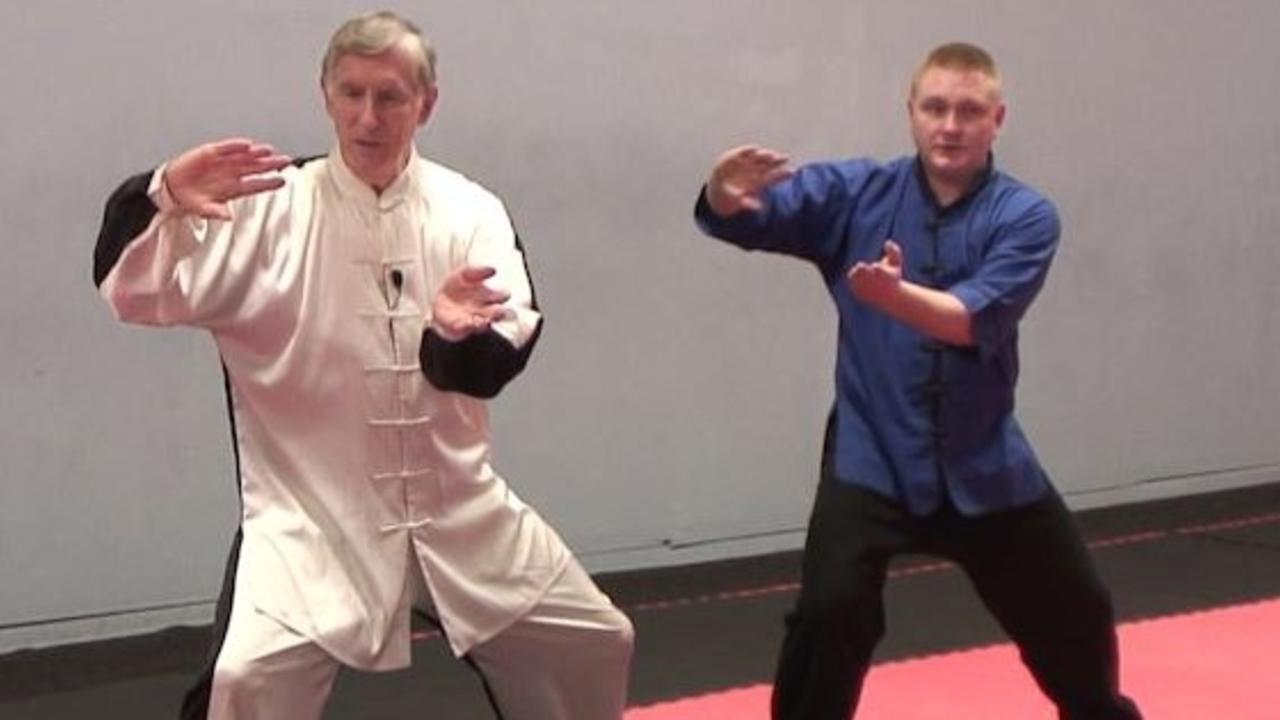
Finding Your Root is Important but Can You Carry It With You?

Uncategorized Jul 15, 2019
When you train with an "old school" traditional teacher, you learn to "eat bitter."
 
In China, stories are told about teachers who had prospective students spend a year sweeping and cleaning before learning any of his art.
 
Xingyi masters were said to have new students stand in San Ti for the first year or more of practices.
 
Even today, when you train with a member of the Chen family, it is common to collapse from leg fatigue more than once, even during a 12-hour weekend workshop. You will hold stances until your legs burn and shake like you're twerking. And trust me, you don't want to see a 66-year old man twerking.
 
Good teachers spend a lot of time correcting basics - structure and body mechanics.
 
Working on the basics of body mechanics and structure give you a solid "root."
 
Much of your "root" depends on the ground path and peng jin. You must sink your energy and apply the correct mechanics.
 
Where Good Structure Fails
 
When I began training with my secon...
Continue Reading...

Say No to Noodle Legs -- Do Not Collapse Your Legs in Tai Chi

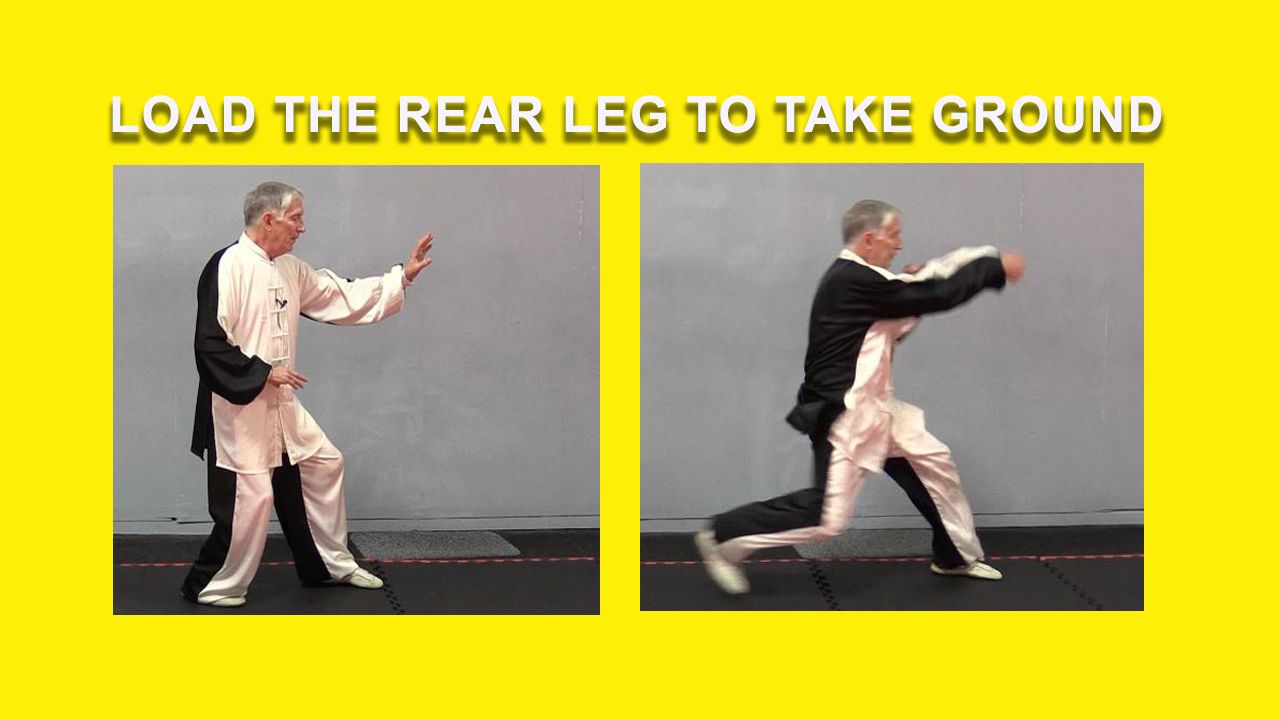
See the two images above? 
 
The left image shows a mistake that I see a lot. In fact, there is a good chance you are making this mistake in your forms, especially Bagua and Taiji.
 
I spent several years making this mistake and I was never called on it.
 
Then, I was training with Chen Huixian and her husband, Michael, and they pointed it out. I was doing "Buddha's Warrior Attendant Pounds Mortar" and it was pointed out that my rear leg was collapsed.
 
In the left photo, my right leg is collapsing. I have lost my peng.
 
In the right image, I am maintaining peng through the legs.
 
As you can see in the image on the left, my stability and strength is far less with a collapsed leg. I cannot "defend from all directions."
 
It is a lot more difficult to maintain peng in the legs. It helps to relax and sit deeper into the kua, and it requires a lot of mental focus until you break the habit of collapsing.
 
That one bit of advice changed a lot of my stances. And now, I see...
Continue Reading...

Can You Lift Weights and Do Tai Chi, Xingyi or Bagua?

The photo shows a practice tip that is on my Bagua Basic Skills DVD and in the Bagua section of my website. It shows me walking the circle with dumbbells in my hands.
 
One of the traditional training methods for old school Bagua students was to do this with a brick or a stone in each hand. Now, we have dumbbells, so we can use those.
 
This not only helps develop circle-walking, but it is a weight-training exercise to help build your arm and shoulder strength, not to mention leg strength from circle-walking with the extra weight.
 
A Huge Fallacy in the Internal Arts
 
I have heard many people in the internal arts say that weight-training is a violation of internal principles. Even doing push-ups is a violation. They believe you should only do Taijiquan, for instance, and nothing more.
 
If you practice an internal art like Taiji, the argument goes, it is all the fitness training that you need.
 
One guy who claims to be a "master" instructor of Tai Chi told me that he wen...
Continue Reading...

A Focused Mind - Not an Empty Mind - Helps Your Tai Chi Practice

My favorite Zen joke is this one:
 
How many Zen masters does it take to screw in a light bulb?
 
The answer: A green tree in a quiet forest.
 
I love telling that joke to people who don't know Eastern philosophy, just to see the puzzled looks on their faces.
 
A Quiet, Focused Mind is a Difficult Goal

The chaos that our minds endure each day is no joke.
 
We are all on the move every day. We are bombarded with messages, texts, emails, photos and social media posts, advertising and calls. If you watch the news or see online news headlines, the negativity can really disrupt your mental tranquility, if you have any to begin with.
 
When we take time to practice our martial arts -- which is too little time for most people -- our minds are still jumbled with activities at work, deadlines, what to pick up at the store, what our spouses and partners need, or what our children are up to.
 
Or, we just dive into our practice and start working on a form or techniques.
 
But if ...
Continue Reading...

The Ground Path is Step One in Building a Strong Internal Structure

The first concept I introduce new students to is the ground path.

We do exercises with a partner to learn how to establish and maintain the ground path and combine it with peng jin.

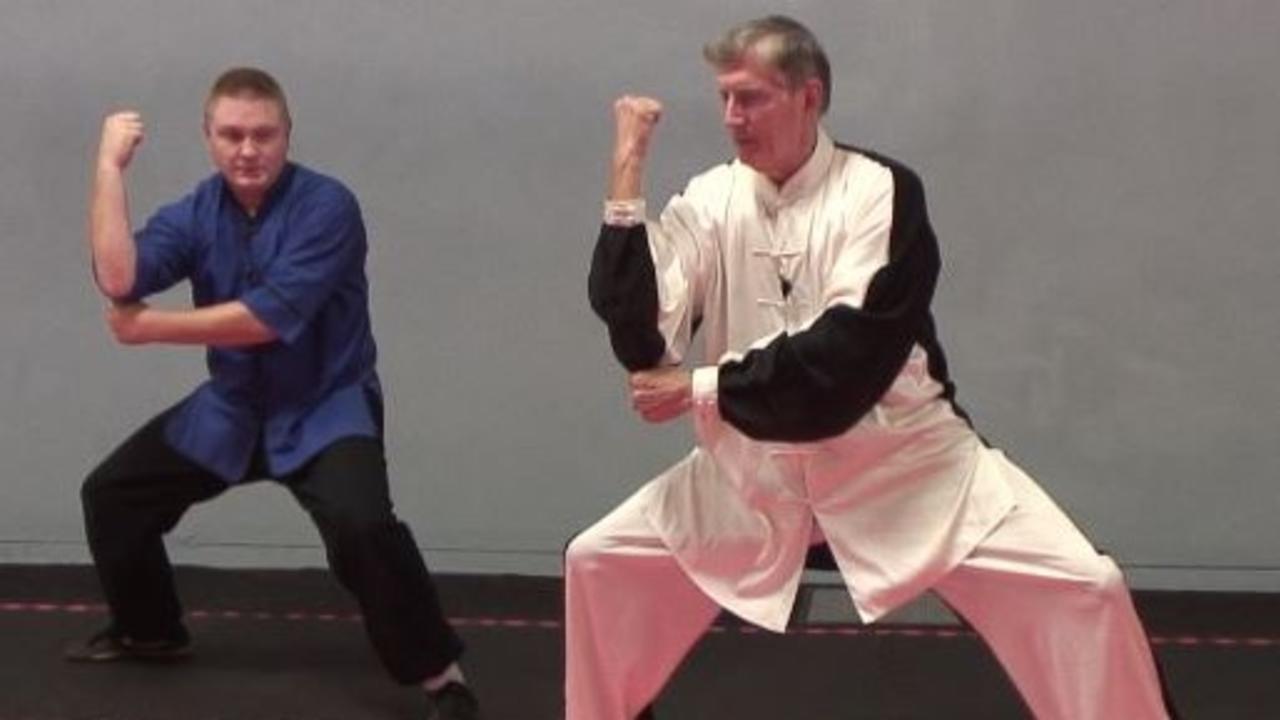
But some people who see a photo like the one here make the mistake of thinking, "That's useless. You can't use that in a fight."

In this photo, my training partner Tom is pushing into my right elbow and I am grounding the push into the ground through my left foot.

Tom is not supposed to push with too much force, although as you can see in the picture, this particular drill is used to show that you can, in fact, set up a pretty strong structure using the ground.

The ground path is generally practiced without too much force because the idea is not to make you Superman, to meet force with force. Tai Chi doesn't fight force against force.

The idea is to provide internal strength to your body structure, but as you hold that strength in, for example, a self-defense situation, your goal will not be to meet f...

Continue Reading...

Translations of Ancient Tai Chi Classics Can Point You the Wrong Way

body mechanics tai chi May 15, 2019
I was reading a book by well-known martial artist and teacher, and he wrote something that could send people down the wrong path.

I like Dr. Yang Jwing-Ming. He has done some good things for the arts. He has tried to save some of the older texts and Chinese "songs" and "poems" related to martial arts.
 
He is a dedicated martial artist and scholar, and apparently a very nice guy. This is not about his skill.
 
But in his book, "Advanced Yang Style Tai Chi Chuan," he should have gone one step further when he translated and interpreted some old Tai Chi classics.

The first of the classics he presents in the book is supposed to be by Chang San Feng (also spelled Zhang San Feng), but we all know that there is absolutely no evidence that Chang San Feng was a real person. He is a "legend," which means he probably didn't exist. A lot of people who refuse to say the Chen family created the art insist that Chang created it centuries earlier.

Dr. Yang should have mentioned this in the book, but ...
Continue Reading...

Why You Need to Study Self-Defense Aspects of Tai Chi, Xingyi and Bagua Even if You Do The Arts for Health

Uncategorized May 08, 2019

I asked a question of my website members two nights ago on our private discussion page for members only. There was a great response.

I asked if they joined to learn the arts (and Qigong) for health, fitness and meditation, or did they join for the self-defense instruction?

The answers were a mixture. Some do it primarily for health and fitness, especially if they are older.

Some people say they do not have training partners, so they are hampered in learning self-defense.

But some members are already studying in other schools with other teachers and are looking for more authentic internal principles, or their instructors do not teach self-defense at all.

I believe if you are studying with a teacher who does not teach fighting applications of every movement, you should run away and look for a new teacher.  But if you are in that situation, you can learn the information you need on my site and you will probably then be able to teach your instructor. He or she should be paying YOU.

I...

Continue Reading...

6 Internal Strength Skills You Need To Learn FIRST in Tai Chi, Xingyiquan or Baguazhang

Uncategorized Apr 29, 2019

Do you know all six of the key skills you need to know for quality internal martial arts?

These skills are taught in the Internal Strength section on my website, and I always urge new members to begin in that section.

Beginning your own study can be overwhelming. Where do you begin?

This post is an attempt to answer that question.

Step One -- The Ground Path

You will read this quote from many masters: "All strength begins with the ground." The ground path gives your movements a foundation of strength. 

To use the ground, you need to set up your body structure so there is a "path" from the ground to the part of the body that is most active in attack or defense at that moment.

Step Two -- Peng Jin

The ground path and peng jin work together. Good internal movement requires both.

Peng jin can be described as an expansive force or feeling through your movement, like a beach ball filled with air. You can press on a beach ball and it will give a bit, but not much, and the pressure ...

Continue Reading...

Fighting in the Boy's Room -- Avoiding the Opponent's Strength

Uncategorized Mar 26, 2019
Charley was a jerk. I hate to be judgmental, but he was a jerk. And one day, during my senior year of high school, he started hitting me on the back of the head in our history class.
 
I was sitting in front of him, and he kept smacking me on the back of the head.
 
Usually, I would welcome ANYTHING that distracted me from history class, but this was irritating.
 
I told him to cut it out, but he kept smacking me. Finally, in anger and frustration I said, "Let's go down the hall to the restroom."
 
We went down the hall and into the boy's restroom. Nobody was there, but one of Charley's friends came with us.
 
Charley and I squared off. He got into a boxer's stance.
 
Before I knew what was happening, he punched me right in the jaw. An explosion of pain tore through my head.
 
Holy cow! I thought my jaw had been dislocated.
 
I had never been beaten up before, but it was instantly clear that he had boxing skills. This was in 1971, more than two years before I enrolled i...
Continue Reading...

Turn the Waist More Than the Hips in Tai Chi, Xingyi and Bagua Movement

In the first internal martial arts school I enrolled in, the Dantien was talked about a lot. It was often referred to as the "One-Point." In our movements, if we were throwing a punch or kick, the teacher would sometimes shout, "Snap your One-Point!!"
 
What he meant was, snap the hips; turn the hips sharply and fast so your Dantien snaps with it.
 
It was later, when I trained with members of the Chen family and their students, that I learned why it is wrong to turn the hips so much.
 
For one thing, it kinks up your structure and moves you out of a centered stance.
 
If you look at a new student, it doesn't matter what martial art they have studied -- karate, TKD, wrestling, tai chi -- if I ask them to turn their waist, they always turn the hips. They will do it every time.
 
The waist is NOT the hips.
 
Here is a little test you can do with nobody watching.
 
Keep your hips in place -- facing forward -- and without moving the hips, turn to reach something behind you. D...
Continue Reading...
Close

50% Complete

Two Step

Thank you for subscribing. I promise not to pelt you with constant messages that do not provide value. You will learn about internal arts news, inspirational posts, new videos, and other messages designed to help you in your martial arts journey.