Is Your Martial Art Preparing You for Real-Life Self-Defense?

What is real-life self-defense? What is real-life self-defense with the internal arts?
Do I need to step into a ring and go full-contact these days to prove myself?
Do you?
There are suddenly a lot of keyboard warriors out there who seem to think so. Personally, I have mixed feelings about it. I have always enjoyed fighting, but as an adult, I believe it is much better to learn how to fight without getting hurt and without hurting someone else.
When my 15-year-old student was grabbed by a drunk step-father who was preparing to punch him out, my student broke the step-father's elbow with chin-na we practiced in class. That's real-life self-defense.
When my student who is a police officer took a fugitive rapist down with Pi Chuan, a Xingyi technique, he didn't ask himself during the encounter if he was using internal energy just right. He simply took down the man who was considered dangerous.
When three drunk guys at a concert wanted to fight me, I remained centered and managed...
Eight Questions to Ask Chi Masters Who Demonstrate Supernatural Powers
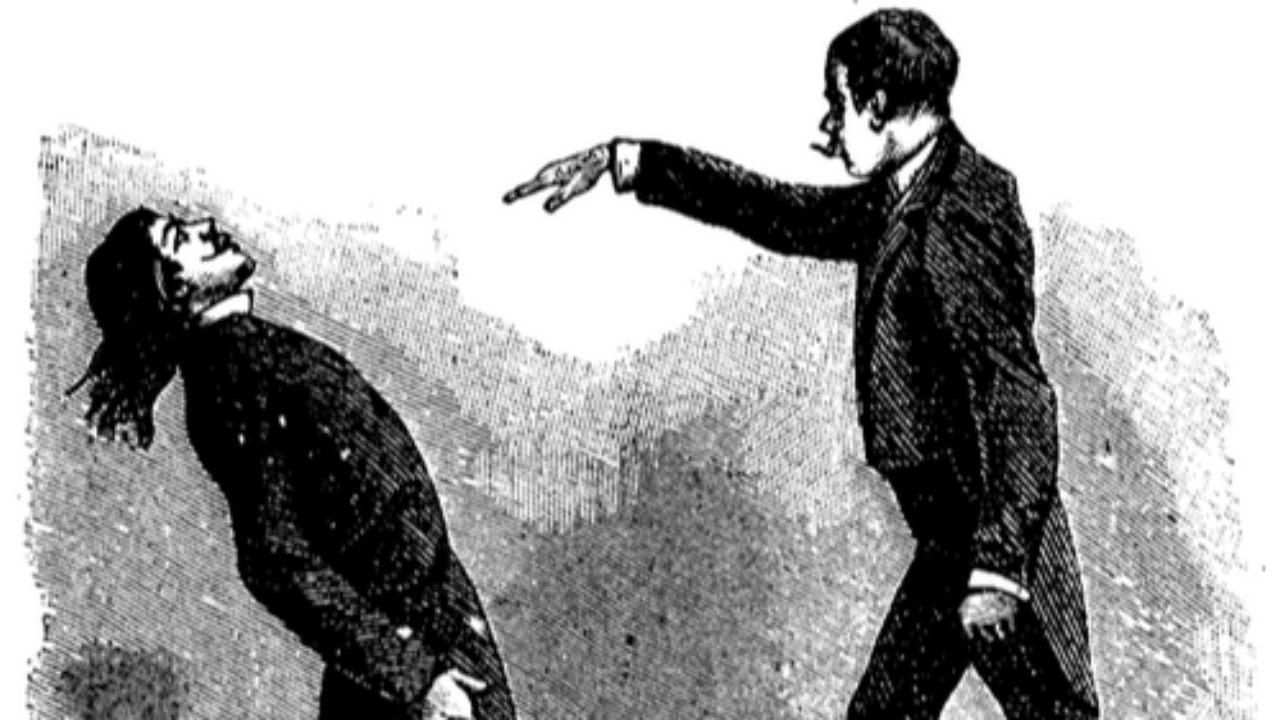
Do you know what a skeptic is? The word has been given a bad name by people who want you to believe their crap so they can take your money.
A skeptic is someone who simply asks for evidence -- solid evidence -- before believing an extraordinary claim.
I am a skeptic.
If someone wants to sell me a used car, I expect some evidence that the car is not going to break down when I drive it off the lot.
If a doctor wants me to take a medicine, I ask for information on the side effects and exactly why I need the medicine and how it will help me.
If a martial artist or a "chi master" claims that he can knock people down without touching them, or have a push hands partner hopping and bouncing away with the slightest touch, I am going to demand evidence, and video is not evidence.
You will not get evidence from anyone who makes money off of fantasy. You will not get evidence from con artists and swindlers. Here is what you get:
1. You are told "you just don't understand."
2. You are ...
Boards Don't Hit Back -- Bruce Lee's Famous Line is Only Entertainment
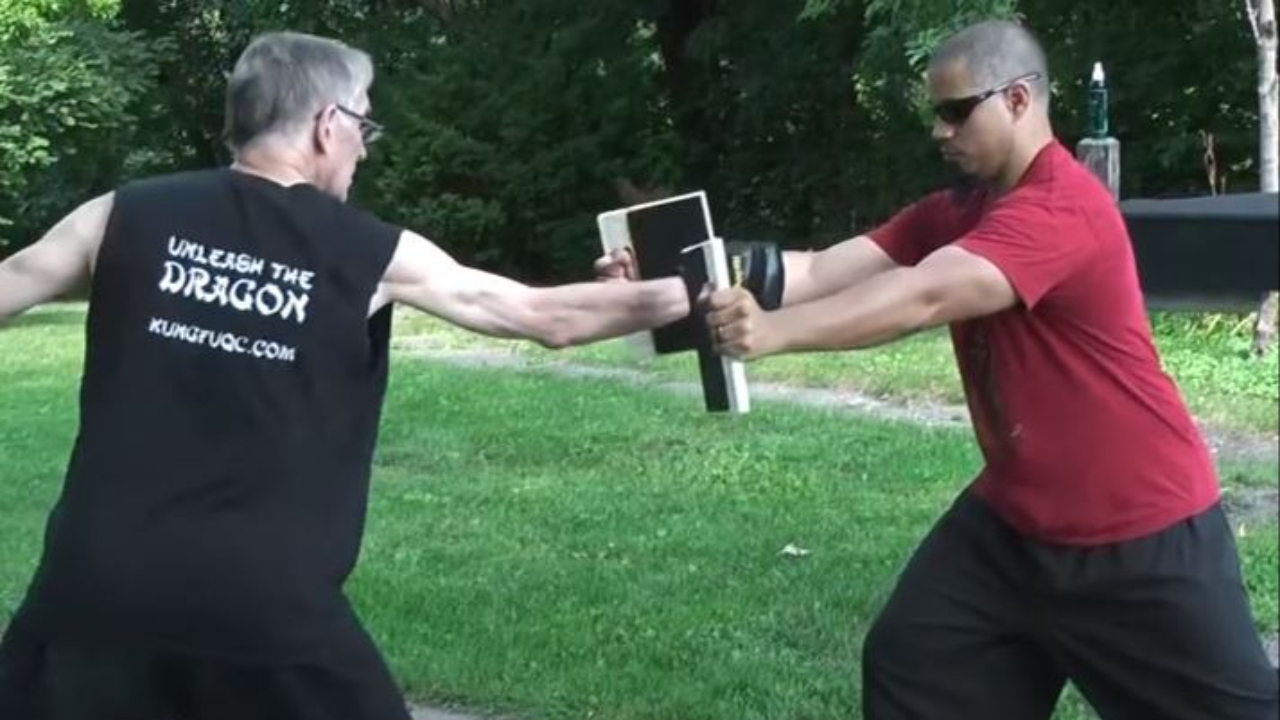
Last Saturday at our practice, we took a few minutes to have fun with board-breaking. We used the black rebreakable board, which is worth a couple of regular wooden boards. We tried different breaks from short range, the idea being if you are in close, can you generate enough power to do some damage to an opponent.
Here is the video that resulted.
When you put a video like this online, you will inevitably have someone reply with "Boards don't hit back." Sometimes a friend will say it in jest, but sometimes it is said by someone who is serious.
"Boards don't hit back" is a line that Bruce Lee said in "Enter the Dragon," when Bob Wall broke a board at the beginning of a fight with Bruce.
Since 1973, some Bruce Lee "purists" and "Real Fighting" macho guys have pretended that board breaking is stupid.
They would be wrong.
Yes, boards don't hit back. Neither do heavy bags. Neither do makiwara boards. And neither does paper.
Did you know that Punching Paper was one of Bruce Le...
Connecting -- The Number One Skill in Tai Chi, Hsing-I or Bagua
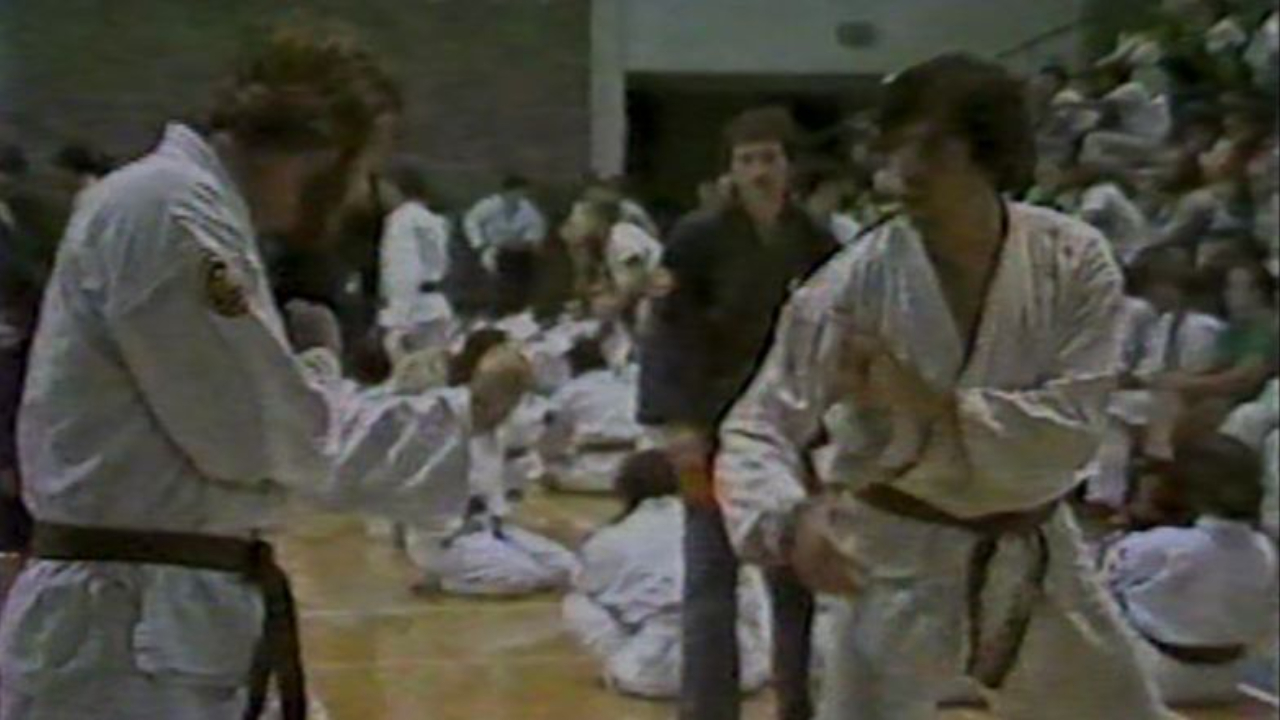
Then I connected. I relaxed and got my head out of the match. I waited with a relaxed state of readiness for him to move.
When he attacked, I was already moving. When he arrived, I was already there and planted a hook kick on the side of his face.
When I took my black sash test in 1997, among the many tasks I had to perform was a sparring match with wooden broadswords to show strategy, technique, and skill. My "opponent" was another black sash with a wooden broadsword. He was cocky and considered himself a lot better.
I relaxed and calmed my mind. I centered, and connected with him. We assumed the on guard stance.
The instant he moved toward me with ...
Do You Understand the Body Method - "Shen Fa" of Your Martial Art?
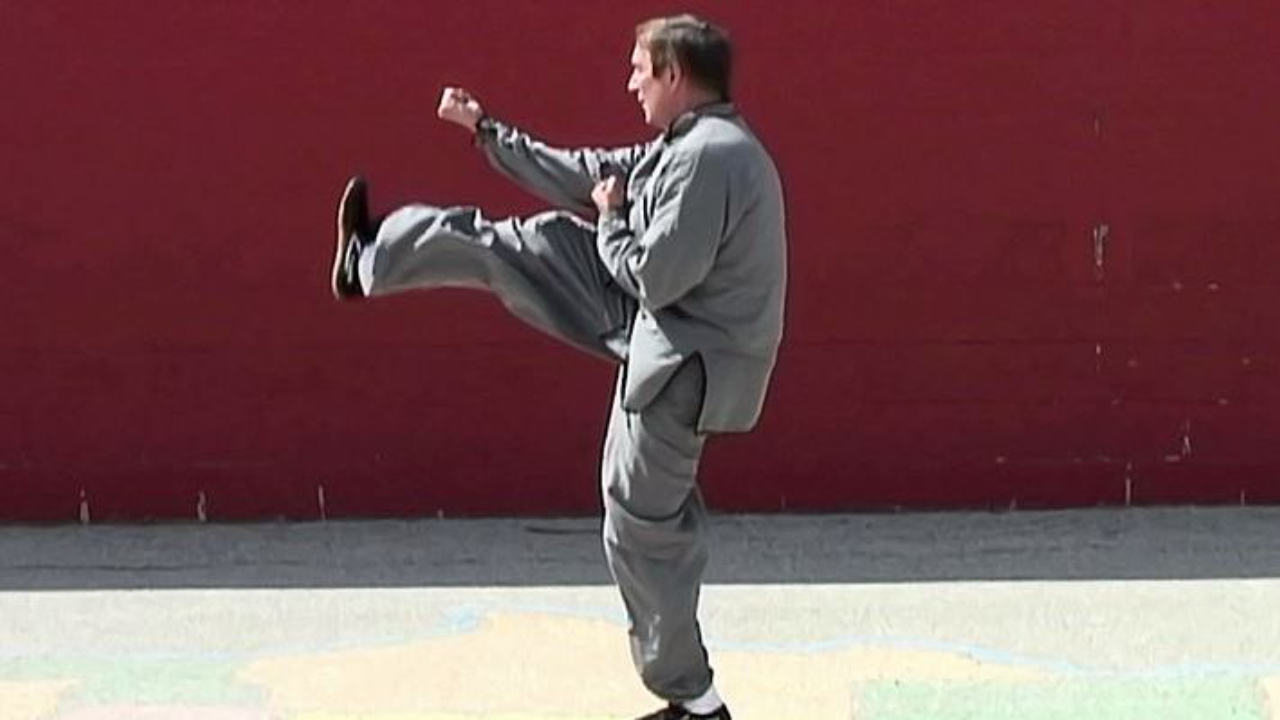
What does the term “body method” mean when it comes to Xingyiquan, Taijiquan and Baguazhang? The Chinese term for body method is “Shen Fa.”
Putting it simply, body method is the way you train your body to move in practicing an art so you achieve the result of moving in this same way when you do self-defense. It involves structure, body mechanics, and concepts for receiving and discharging force.
Each art has distinct ways of training, but I have broken some of the key body mechanics down, and I teach those body mechanics as a way to begin developing the body method for effective internal arts.
The six key body mechanics include:
- Establishing and maintaining the ground path at all times.
- Maintaining peng jin at all times.
- Using whole-body movement.
- Silk-reeling energy connected through the entire body.
- Dan T’ien rotation.
- Opening and closing the kua.
When you develop these six body mechanics as you train the various exercises, forms and fighting concepts of the internal...
The Perfect Image of Bagua Zhang - the Spinning Wire Ball
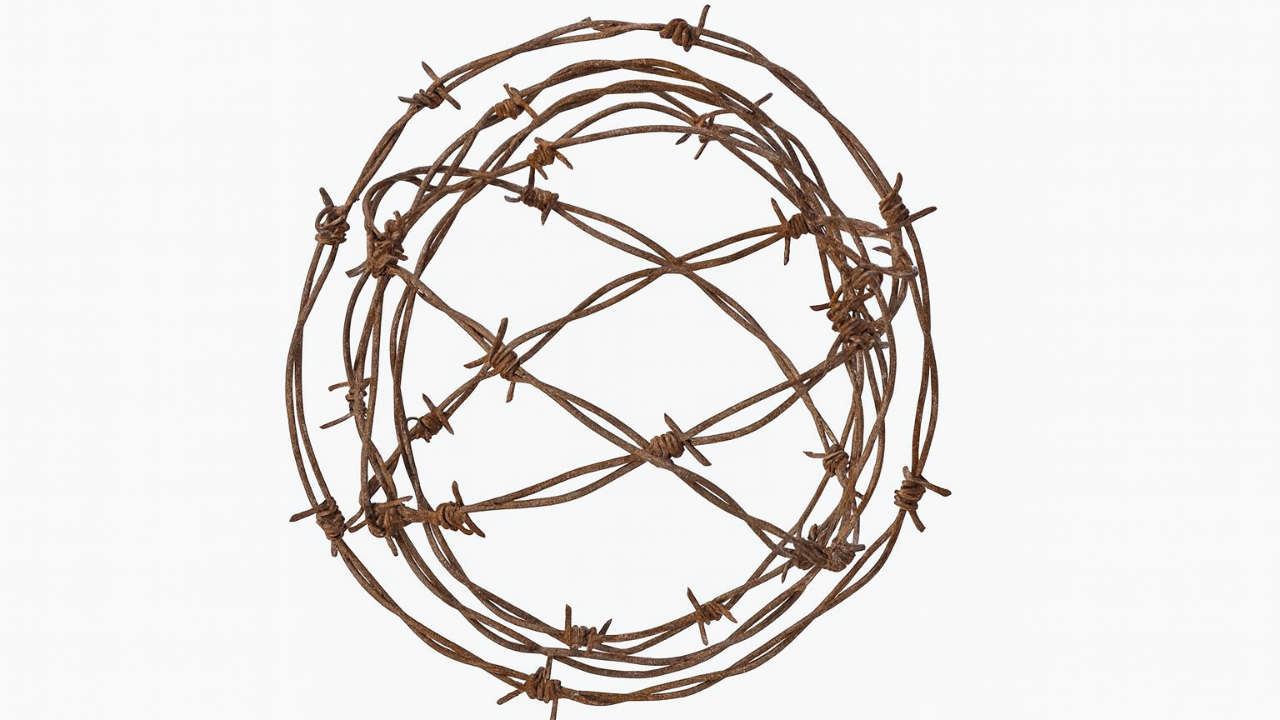
There are three images that summarize the three main internal arts. They are simple images and do not encompass all the subtleties but still represent good concepts.
You can think of Xingyi (Hsing-I) as a wedge driving through an opponent. A Xingyi fighter explodes through an opponent and takes his ground.
A Taiji fighter is like a beach ball being submerged into a swimming pool. The ball will take your
energy and give a bit, but there is strength underneath, and it will spring back and spin, dumping you into the water.
Bagua is like punching into a spinning wire ball. The ball catches your force and spins you off-balance, controlling your center and spinning you out in unexpected directions. It often leaves you broken by the time it spins you out.
Here is just one example. My opponent punches. I intercept the punch, wrapping my left arm
around his punching arm. At the same time, I begin spinning to his outside.
I hook his right arm and continue to spin. At this point, I ca...
What "Intent" Really Means in Taiji and the Internal Arts
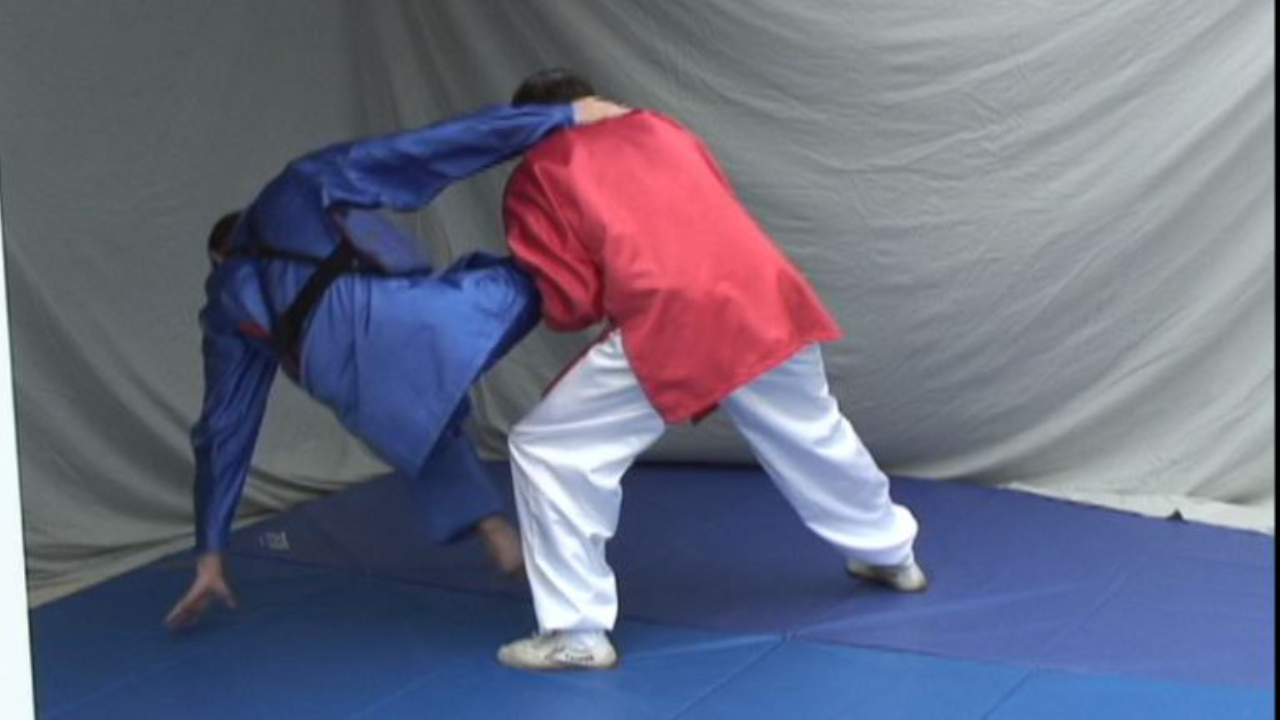
I am currently updating my instructional videos for the Chen Tai Chi form Laojia Yilu, replacing video shot between 2008 and 2010. As I was shooting instruction on Sunday for the second movement of the form -- Buddha's Warrior Attendant Pounds Mortar -- the concept of "intent" came to mind as something a lot of people misunderstand.
A lot of Tai Chi instructors talk about "intent," but too many students are left with the impression that intent is somehow connected to "cultivating chi" or other mystical, healing energy nonsense.
Let's cut out the noise, eliminate the middleman, and cut to the chase.
"Intent" means exactly what it implies. What is the intent of the movement? What are you intending to do with this movement?
The answer is almost always a self-defense application.
Tai Chi was created as a martial art. Every movement in the form is a self-defense movement.
When you perform Tai Chi movements with the intent of self-defense, it informs how your "energy" should be use...
No Room for Fear -- What You Should Expect from Your Personal Philosophy

Caution: this post contains a very graphic photo below. If blood upsets you, don't scroll down.
I have spent five of the past six nights in the hospital, including two trips in an ambulance. I've had to postpone a podcast interview and a few gongfu practices.
It started when I was sitting in my home office and began coughing up blood. This went on for over half an hour. It stopped for half an hour and then began even harder. Nancy called 911 and the ambulance came.
By the time the coughing stopped, long after I arrived in the ER, about two pints of blood had come up from my lungs and out my mouth. At one point, it dawned on me that blood loss could cause me to pass out and there was a chance I wouldn't wake up. The ER at Illini Hospital couldn't help me, so after the bleeding stopped they sent me by ambulance 90 minutes away to Iowa City and the University of Iowa's Medical Intensive Care Unit.
They...
How to Use Tai Chi for Meditation - Moving Mindfulness

Tai Chi is a martial art, but in the past hundred or so years, the image of Tai Chi has become linked to the concept of "moving meditation," geared toward adults and seniors who want a relaxed way to exercise and improve their health, balance, flexibility, etc.
Those of us who see Tai Chi as a vigorous, athletic martial art are sometimes at odds with those who preach the art as something that will make you "One with the Universe" or will help you "cultivate chi."
I am a chi skeptic. I do not think chi is a scientific reality. After all these centuries, after scientific discoveries that include atoms and quarks and relativity, no one has ever been able to prove that chi is real.
But recently, interviews I have done for my Internal Fighting Arts podcast, and studying I have done on Mindfulness, made me realize there is a happy medium where focusing on the proper body mechanics when performing a Tai Chi form -- the body mechanics that make it martial -- can be combined with Mindfulnes...
Rules and Rituals in Martial Arts -- Is It Respect or Superstition?
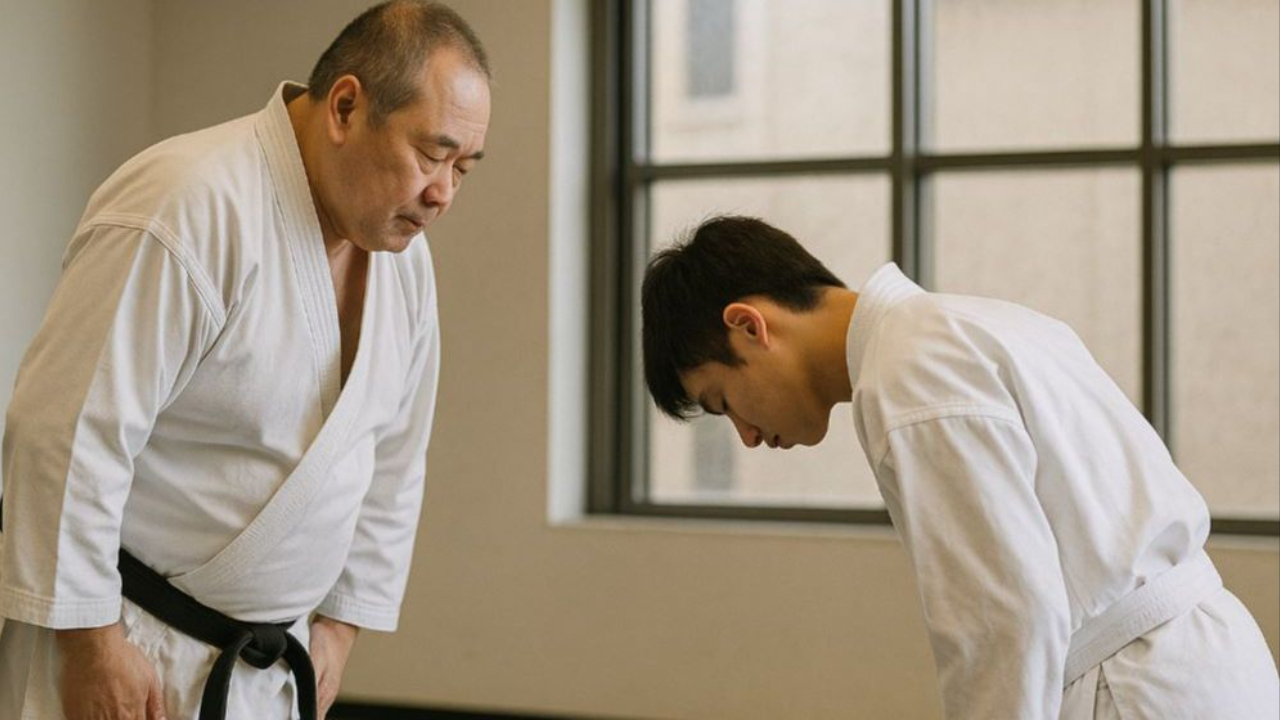
I belonged to an internal arts school that had some rules that were carved in stone. Here are some of them:
**Each time you approach the training floor, you stop and bow to the floor. Each time you leave the floor, you bow to the floor before stepping off.
**Street shoes are NOT allowed on the training floor.
**At the beginning of each class, there is a moment of meditation and a bow to the shrine at the front of the room, designed to honor past masters.
**Only instructors are allowed to touch objects on the shrine.
**If you drop your sash to the floor, you must kiss both ends before putting it back on to show that you intend no disrespect to yourself.
**Men wear the knot on their sash on the right side and women wear it on the left. Once you reach Master level that reverses -- men wear the knot on the left side and women on the right.
**The sash is never washed because according to tradition, washing your sash will wash away your strength.
**When we perform techniques, we coun...
Author - Instructor

Ken Gullette
I have practiced martial arts since 1973 and began studying the internal arts in 1987. My goal is to cut years off your development time by coaching you in the real skills for high-quality Tai Chi, Xingyi, Bagua. To see more about my bio, click the "About Ken" link on the menu at the top of this page.
Stay connected with news and updates!
Recent Posts
Categories
All Categorieschen taiji fighting applications
chen xiaowang straight sword form
critical thinking in martial arts
does tai chi make you live longer?
full contact vs point sparring
how to succeed in martial arts
how to use chi kung in daily life
how to use qigong in daily life
internal fighting arts podcast
ken gullette on kung fu conversations podcast
mindset of successful martial artist
principles of body mechanics in martial arts
the myth of longevity in tai chi
understanding tai chi energies
what is body method in tai chi