If I Can’t See It, Are You Really Doing It?
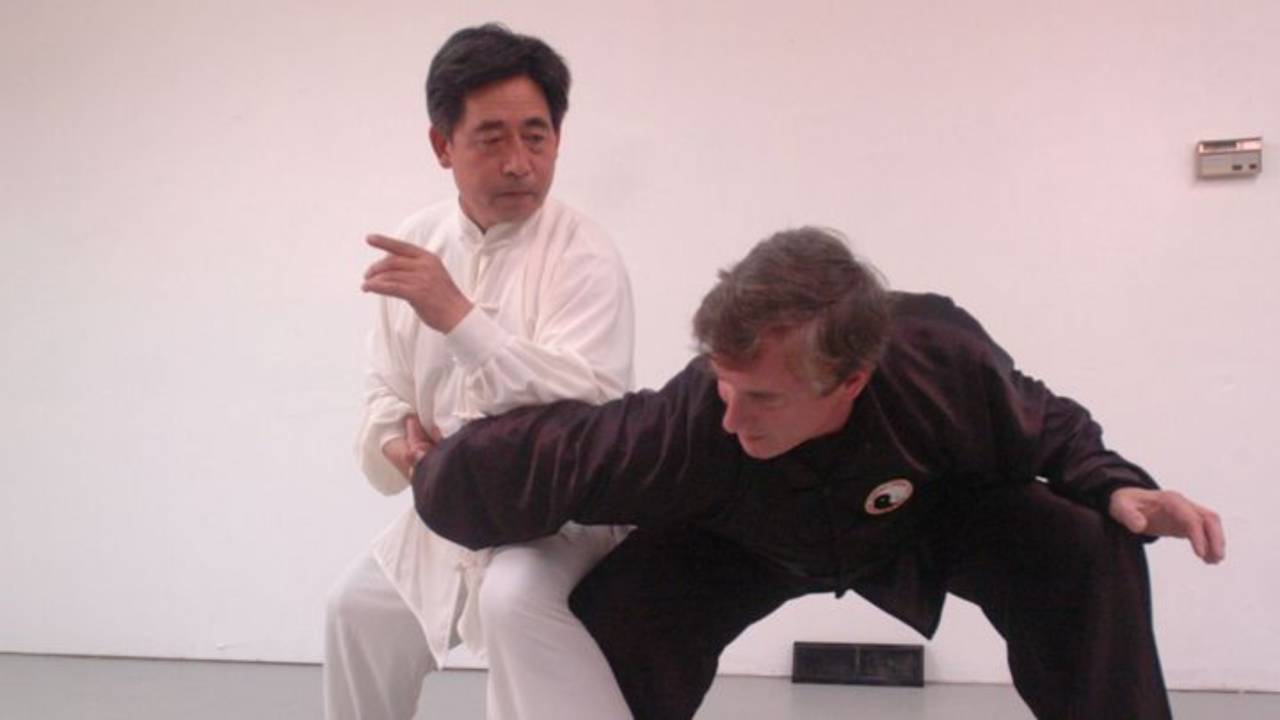
(Photo above shows Ken training with Chen Xiaoxing in 2006)
One of the reasons I switched from Yang style to Chen style Taijiquan in 1998 is because Chen Taiji looked so “alive.”
The body mechanics of Chen style involve spiraling and Dan T’ien rotation, closing and opening, folding in the chest and stomach, and relaxing into the kua (especially the crease at the top of the legs). Instead of high stances, Chen style stressed “sitting in the chair.”
None of these mechanics were taught to me in Yang style. When I switched to Chen style, I began learning things from the “original” style of Taiji that apparently had been lost in Yang style, or at least in the type of Yang style taught in America.
When I talked to a couple of Yang folks about this, they would reply, “Oh, we’re doing it, you just can’t see it.”
Nope. I didn’t just fall off the turnip wagon. If I can’t see it, you ain’t doing it.
Okay, maybe "If I can't see it, you ain't doing it" is overstating the case. But if a traine...
History of Tai Chi -- Historic Sites in the Chen Village
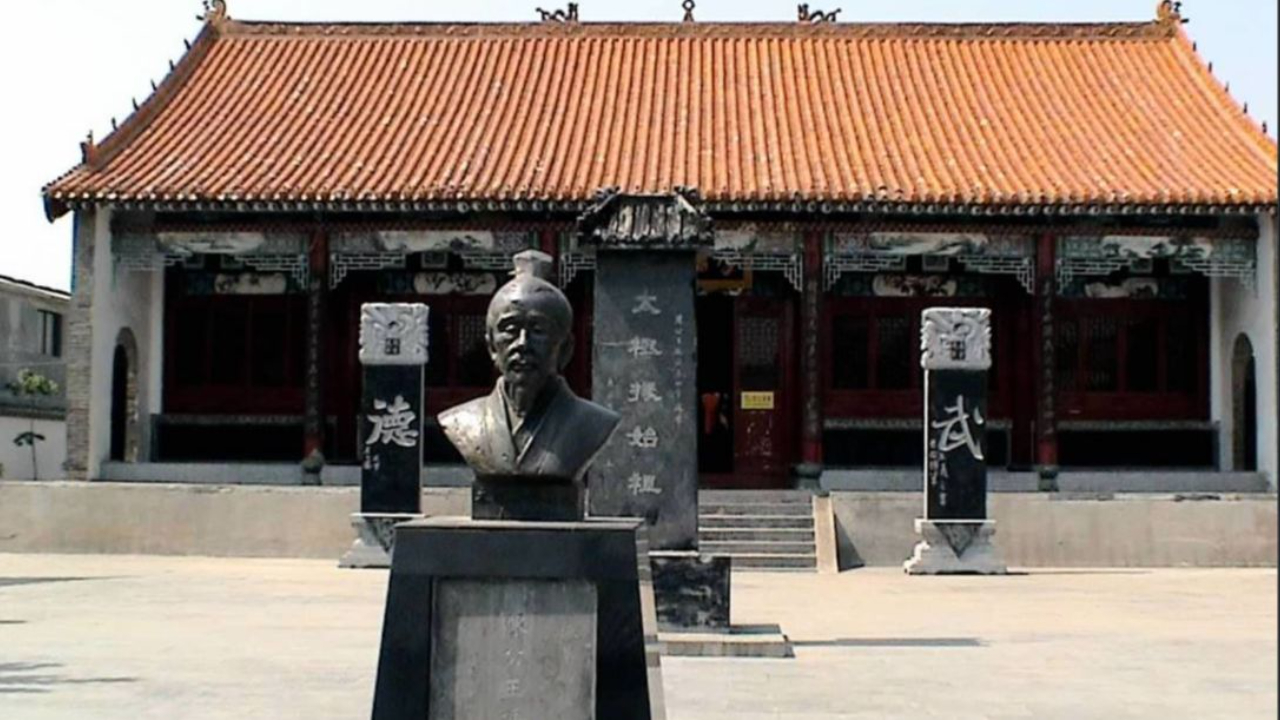
This video shows some historic sites in the Chen Village, in Henan Province, China -- the birthplace of Tai Chi Chuan. Among the sites is the wall where Yang Luchan watched the Chen family perform their art. Eventually, he was taught the art and then went to Beijing to create his style of Tai Chi, Yang style.
The video was taken by my former teacher, the late Mark Wasson, who went on many trips to Chenjiagou to train with the Chen family. On this visit, he was accompanied by Bill Helm of the Taoist Sanctuary in San Diego.
Mark was a pioneer, one of the early Americans to visit and train in the Chen Village. He helped bring some of the Chen family to America for the first time, including Grandmaster Chen Xiaoxing.
Mark, who died in 2013, narrates this video. Chen Village has changed a bit since this was taken in the early 2000s. The government realized there was money to be made, and facilities have sprung up as tourists began coming from around the world to study the amazing art of ...
The Coiling Leverage of Silk-Reeling Energy
Taiji and Bagua are especially dependent upon Silk-Reeling Energy (San ssu jin) but it is also present in Xingyi.
Silk-Reeling Energy provides “coiling leverage” to movement. Silk-Reeling is not a scientifically valid “energy” in our bodies and it is not related to an invisible energy called “chi.” It is just like every other “energy” in the internal arts – it is a method of moving in response to force. The body mechanics of Taiji, Bagua and Xingyi are physical skills that require a lot of mental focus so you can be prepared to respond like an echo to an opponent’s force.
Silk-Reeling energy gives more power to concepts such as “four ounces repels a thousand pounds,” or “four ounces deflects a thousand pounds” depending on who tells it.
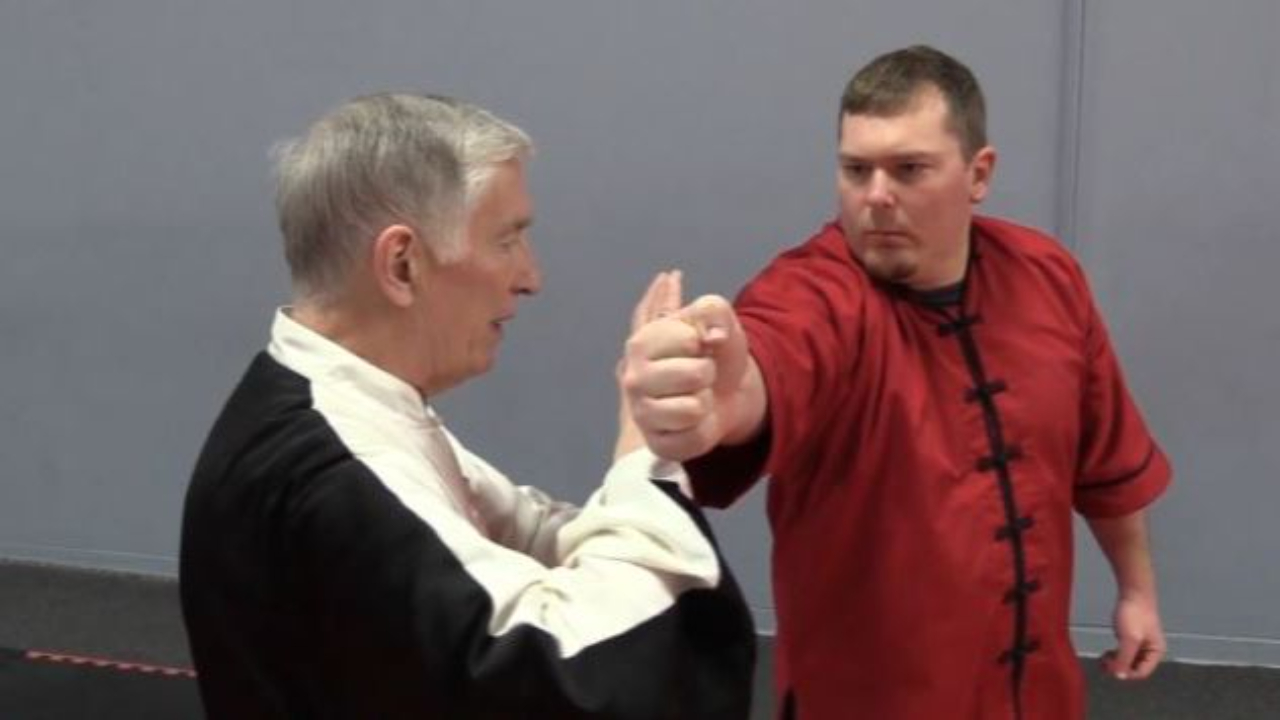
One of many ways this can be demonstrated is with a wrist grab.
Your opponent grabs and you try using normal muscular actions to pull away as he tries to hold on. It will be difficult to escape. You may be able to escape, but it will take a lot ...
Author - Instructor

Ken Gullette
I have practiced martial arts since 1973 and began studying the internal arts in 1987. My goal is to cut years off your development time by coaching you in the real skills for high-quality Tai Chi, Xingyi, Bagua. To see more about my bio, click the "About Ken" link on the menu at the top of this page.
Stay connected with news and updates!
Recent Posts
Categories
All Categorieschen taiji fighting applications
chen xiaowang straight sword form
critical thinking in martial arts
does tai chi make you live longer?
full contact vs point sparring
how to succeed in martial arts
how to use chi kung in daily life
how to use qigong in daily life
internal fighting arts podcast
ken gullette on kung fu conversations podcast
mindset of successful martial artist
principles of body mechanics in martial arts
the myth of longevity in tai chi
understanding tai chi energies
what is body method in tai chi