Be Water, My Friend - Bruce Lee, Push Hands and Close-Up Self-Defense
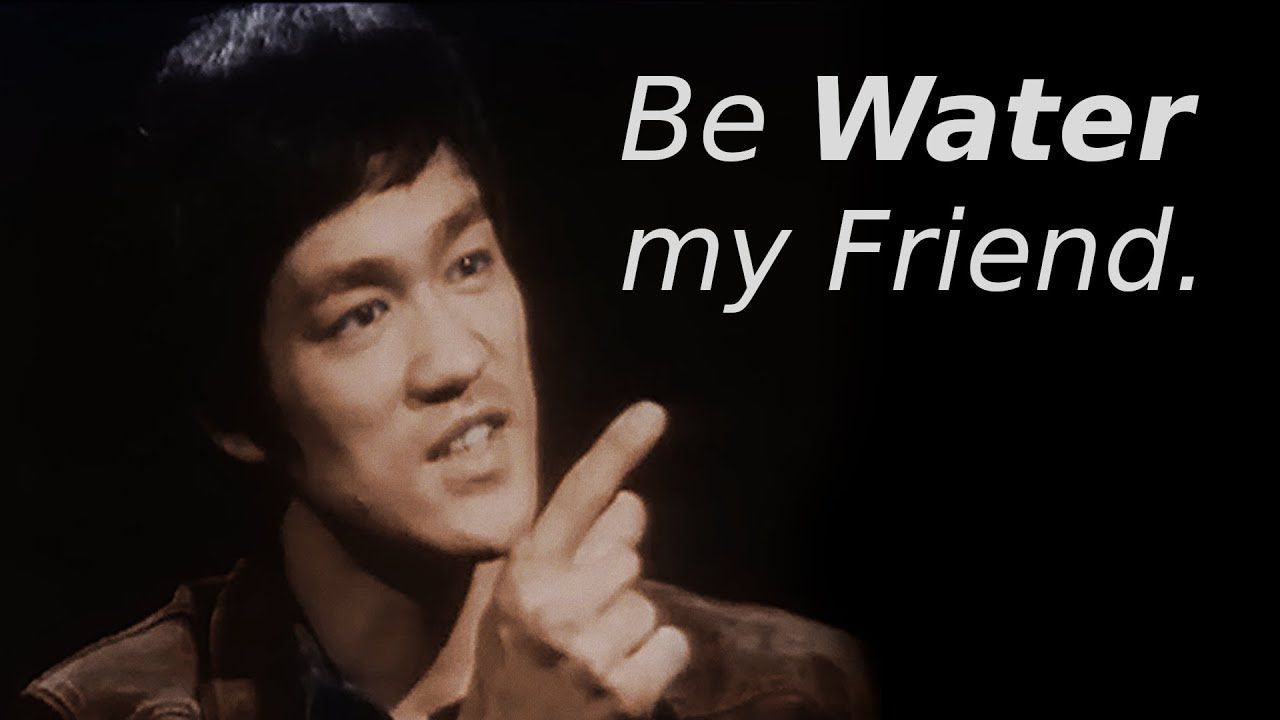
One of my favorite quotes from Bruce Lee was not completely original. The concept was already part of Taoism and Zen long before he said it, but Westerners had not heard it in the early Seventies.
"You must empty your mind," he said. "Be formless, shapeless, like water. You put water into a bottle and it becomes the bottle. Put it in a teapot it becomes the teapot. Water can flow or it can crash. Be water, my friend."
I think of this often when I work with my students on push hands and other close-up self-defense skills. I try to be water, and flow around resistance to find my way to my target.
What happens when you punch water? Bruce Lee talked about an inspiration he had when he was frustrated and punched water one day on a lake. Whether this story is true or not doesn't matter. Bruce said that when he punched into a lake, he was inspired because the water gave in to his punch and yet flowed around his fist.
Taoism says "the softes...
A Hypothetical Conversation with a Martial Arts Student
“How long does it take to get a black belt?” asked the prospective student.
“Five seconds,” said the teacher.
“Really?”
“Yes. All I have to do is hand it to you. But it takes much longer to earn one.”
"Maybe I can earn it faster than most people."
"Well, we don't do black belts. We do sashes, and a black sash doesn't mean very much, really. We only have those because in America, people seem to need it. A black sash doesn't really mean anything."
"It means you are deadly," the student said.
The teacher laughed. "No. It means you have just begun to learn. There are a lot of black belts who know very little and can do even less."
“Oh. Well, I want to be able to use Taiji to fight.”
“Why?”
The student asked, “If I am in a bar and get attacked, will I be able to use Taiji to fight?”
“You can use Taiji to stay away from a bar where fighting may occur,” said the teacher.
“Have you ever had to use Taiji in a fight?”
“No.”
“How about Bagua or Xingyi?”
“No. I have not been in a re...
Listening Energy - Ting Jin - A Crucial Taiji Concept for Self-Defense

There are many "energies" (Jin) in Taijiquan. The term "energy" has been misinterpreted by some people who take the translation too literally. The word "energy" when applied to Taiji simply means a physical method of sensing and dealing with your opponent's force in a way that follows core internal strength principles.
The most important energy in Taiji is Peng Jin. That is the expansive feeling that fills the body and pushes outward. When you touch an opponent, Peng Jin is necessary to test your opponent, "feel" and respond to your opponent's force and the direction that force is going. But the ability to be sensitive to your opponent's force and direction is Listening Energy, or "Ting Jin."
I once belonged to a school where we were taught that if we stood in front of our opponent, if we just worked hard and gained a high level of skill, we could actually "read" his chi -- we could read his mind and know that he was going to attack us even before he made a physical move.
Well, bull...
Use Tai Chi Pluck Energy for Real Self-Defense
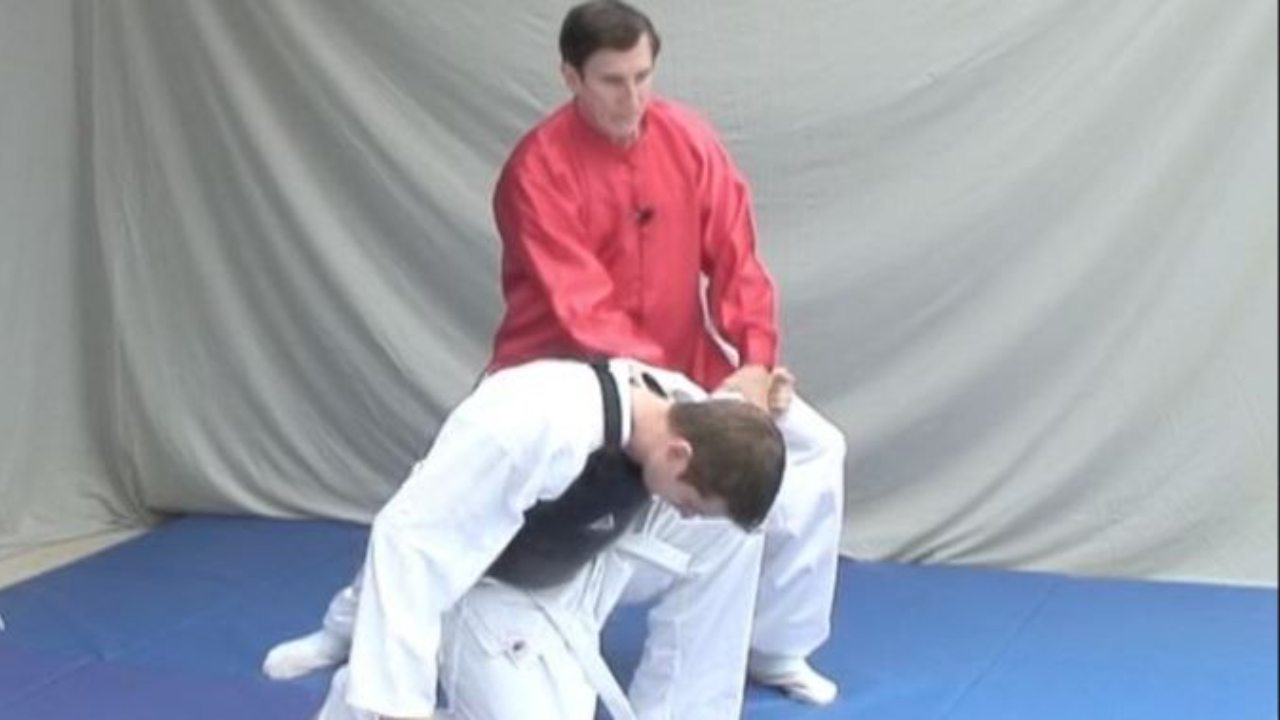
There are many different "energies" in Tai Chi and the internal arts. Cai energy is also called "Pluck." It is a sudden pulling action that can take your opponent off-balance.
Pluck can be done in a subtle way in push hands but in real self-defense, when your life can be in danger, it is not subtle and not especially pretty -- but it is definitely effective and it can be used against all kinds of attacks.
Here is how to begin practicing this particular method of Tai Chi Pluck energy. Have a partner attack you without warning. Your first goal is to cover and block the attack. Instinctively, you should drop your weight and avoid the lifting of the body. This takes a lot of practice and presence of mind. In fact, it is a very good idea simply to react to an initial attack by practicing -- over and over -- the dropping and covering technique to protect yourself in the event of a surprise attack.
Despite what ...
Video Highlights of New Kindle Ebook - Bagua Self-Defense
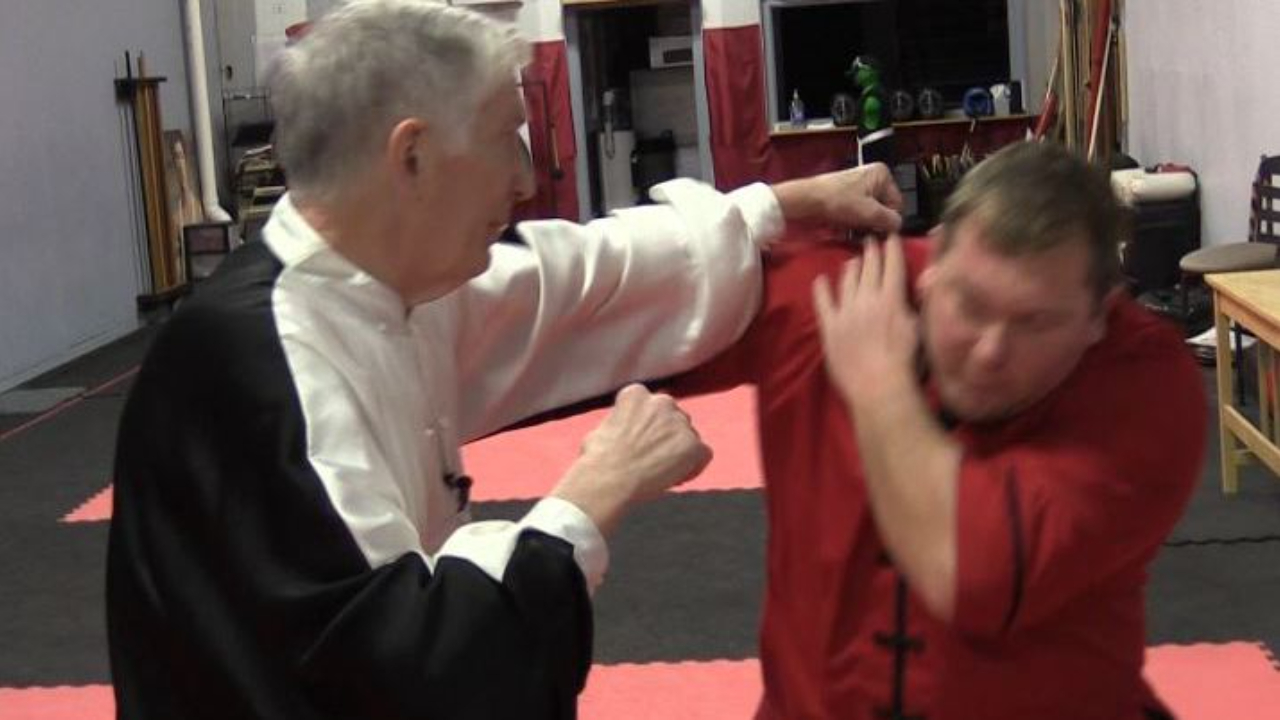
Here is a short video with highlights of some of the self-defense techniques in my new ebook - Baguazhang Self-Defense: Fighting Applications of the Cheng Style Eight Main Palms Form.
The ebook has 380 photos and descriptions of 150 self-defense applications from this one Bagua form. Each application is discussed and shown with an emphasis on internal body mechanics. The ebook costs only $6.99 and is available on Amazon's Kindle Store. Many nations have their own Amazon stores (if you are outside the US, check Amazon in your country). Here is the link to the ebook on Amazon's store in the United States.
The video was done for still photo purposes, to illustrate how each movement in the form is used for self-defense.
Tai Chi's Single Whip - Silk-Reeling and Connected Internal Strength
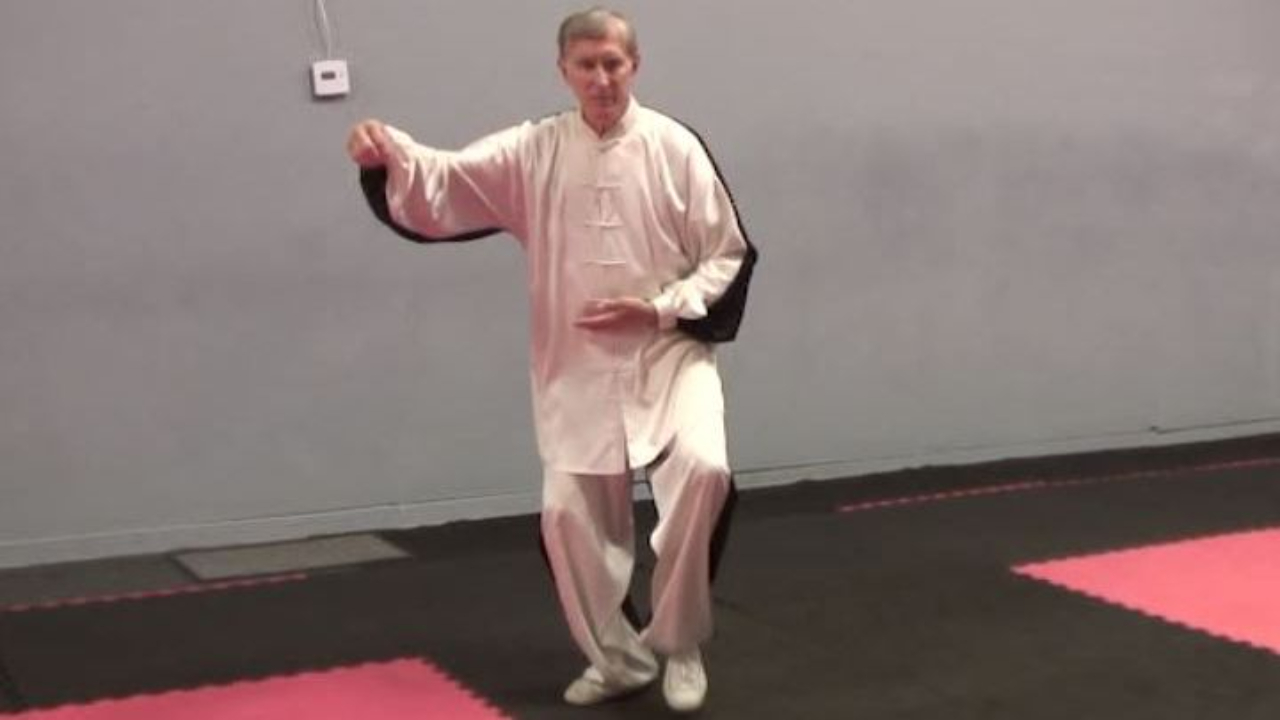
Single Whip is a common movement in all styles of Tai Chi (Taijiquan) and, like all Taiji movements, it depends on some key internal body mechanics that give you relaxed strength. The body mechanics include:
-- Establishing and maintaining the ground path through all movement, including stepping.
-- Establishing and maintaining peng jin, an expansive force that is a physical skill (not mystical).
-- Whole-body movement -- when one part moves, all parts move, and they are connected through the body from the ground.
-- Silk-Reeling energy -- not actual "energy," but a spiraling movement that is another physical skill.
-- Dan T'ien rotation that is the center of all movement.
-- Opening and closing the kua.
There are many other skills and principles, but if you don't have these basic concepts, you aren't going to get very far in Taiji.
I'll show you a self-defense technique that you can practice with a partner using the opening part of the Single Whip movement, when you spiral ...
Two Bagua Moves to Escape an Arm Lock - Baguazhang Self Defense
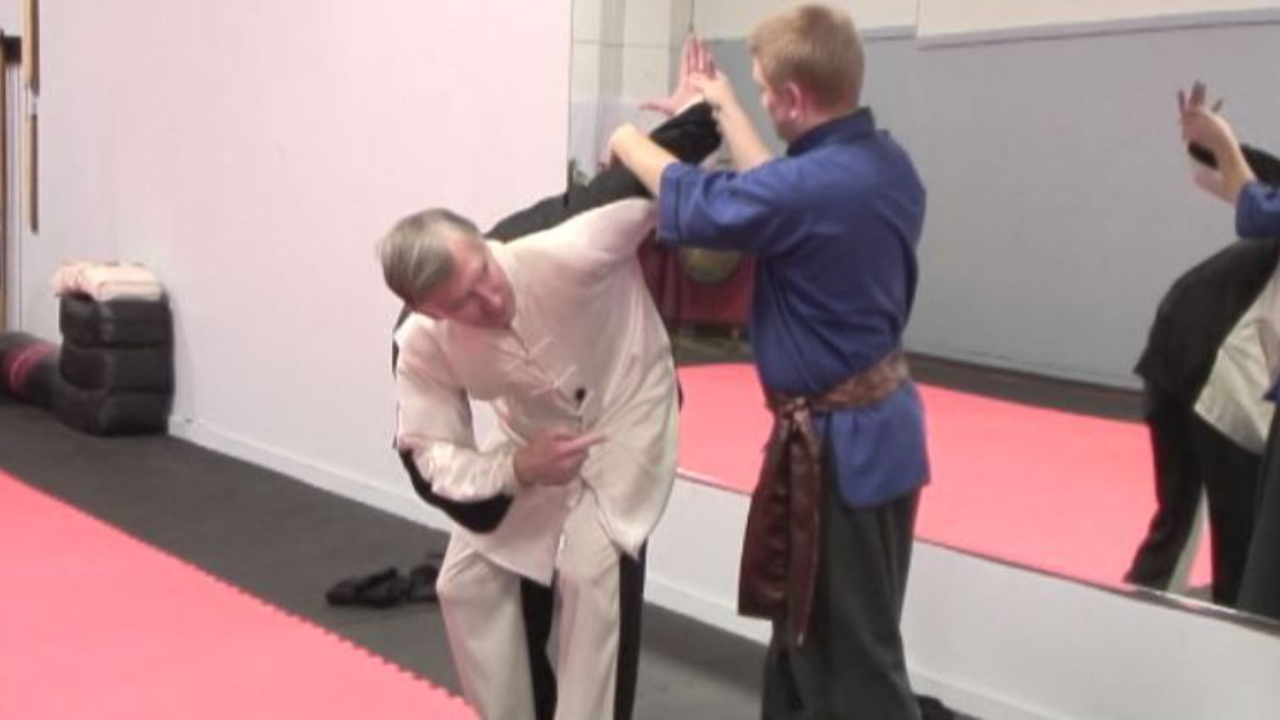
Baguazhang is an internal martial art that relies on circular movement, turning, spiraling, and relaxed power similar to Taijiquan.
Many types of arm locks are used in martial arts. One of the locks that we use is sometimes called "Pat the Bull." Your opponent has you in the lock and has grabbed your shoulder to make it more firm.
In the Cheng style Baguazhang form "Eight Main Palms," two movements in the section called Grinding Palm are very useful for escaping this arm lock. The movements are called "Green Dragon Swings Its Tail" and "White Snake Twists Its Body." In the form, these movements follow each other.
Photo 6-9 shows the start of "Green Dragon Swings Its Tail." You continue to turn, stepping your right foot around into a pidgeon-toe stance, and spiral the arm upward. You continue to spin for the movement called "White Snake Turns Its Body."
When you finish, you are standing upright again.
Someone who applies force to you is often thinking in one direction. An opp...
How to Develop Weak Tai Chi
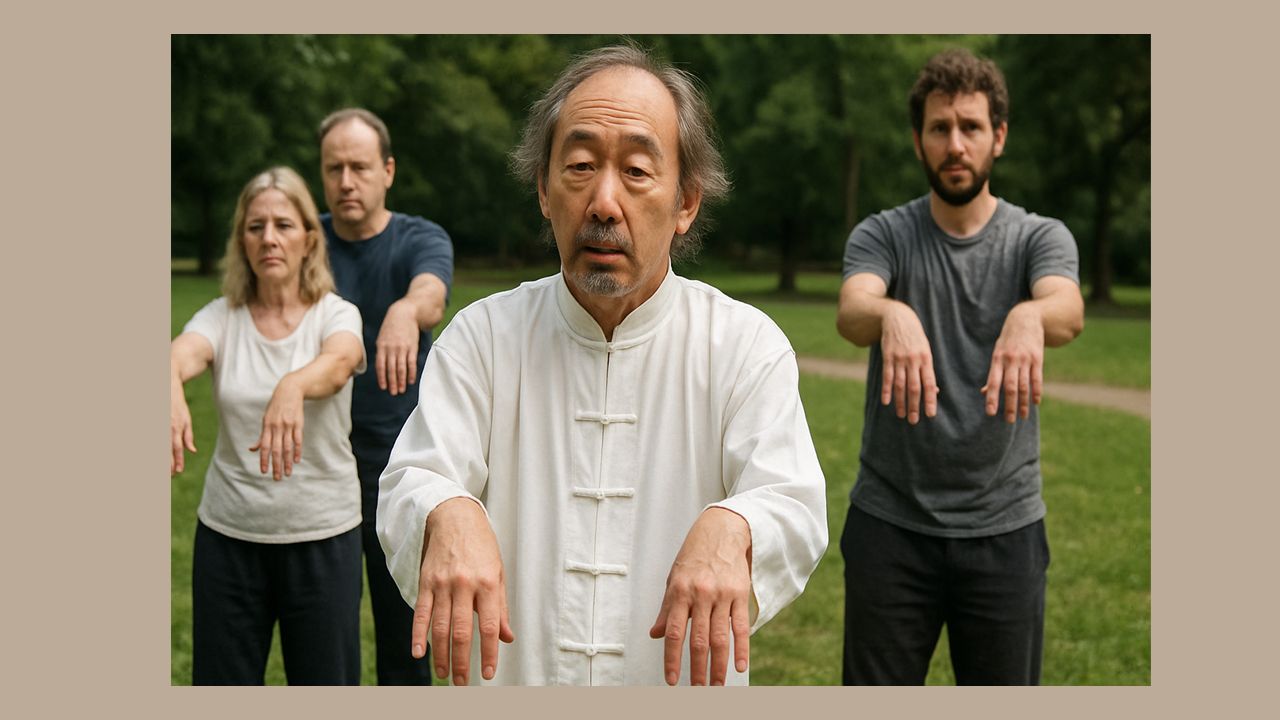
I read a blog post this week by a well-intentioned (I assume) person who teaches Tai Chi and calls it the "art of gentle movement," a description that misses the essence of Tai Chi. Let's forget for a moment that Tai Chi fighters were often hired to guard caravans and train the men in villages to fight. Let's just forget that.
The author of this article says that by doing Tai Chi, you can feel the universe flowing through you and you can achieve enlightenment.
Here is an excerpt from this article that was titled "Entering the Quantum Era of the New Energy":
"Tai Chi Chuan finds it place back amongst the most powerful ways to become a condensed person that has clarity of mind, health of body and emotional countenance. It is said that the real meaning of the martial art is the cradle of enlightenment, that it is about self-discovery through a state of being that allows the universe to flow through the empty space between the particles and that this state brings a higher consciousness ...
Dropping Power - Generating Power Over a Short Distance
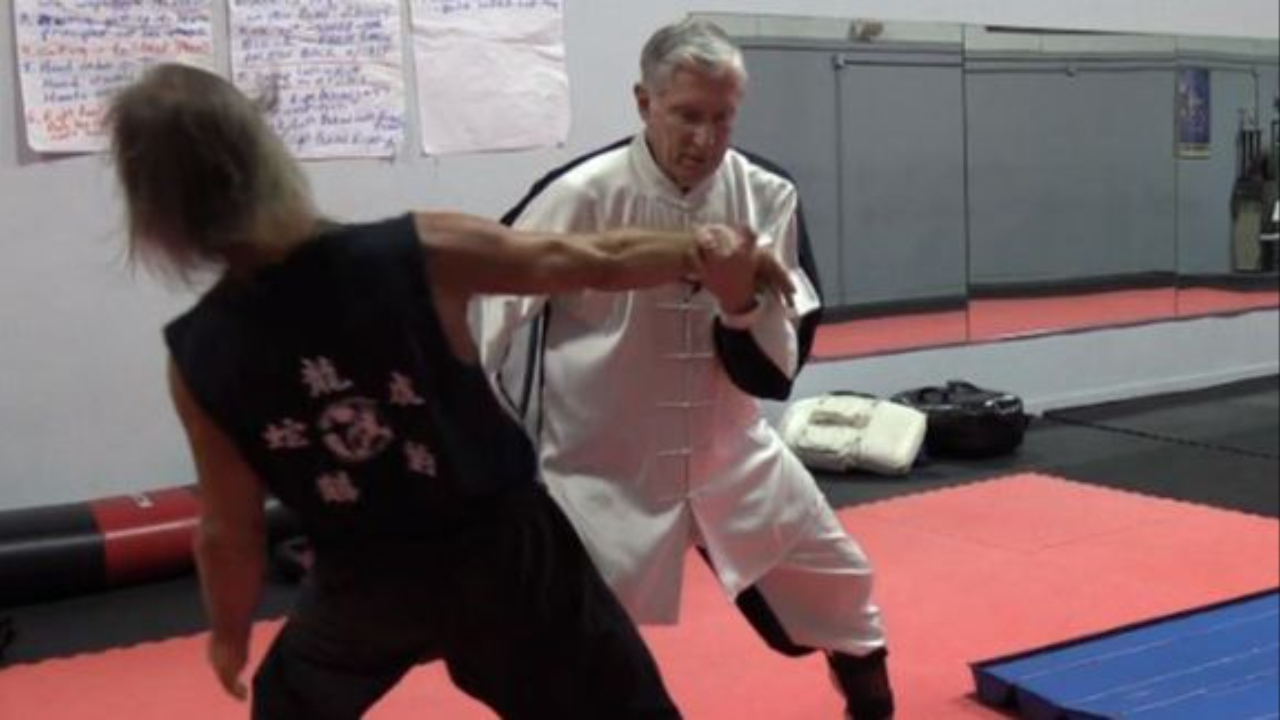
Have you ever heard of the "Teacher Test" in Taiji? When you meet a Taiji instructor, ask if they can do the Teacher Test.
Most often, they will stare at you with a blank expression, but if they actually know what you are asking, and demonstrate the Teacher Test, you have found a good teacher and you should sign up for instruction.
The Teacher Test was demonstrated to me by my first Chen Taiji instructor, Jim Criscimagna, the day I met him in early 1998. I had been in martial arts for 25 years at that point, and I had read about the Teacher Test in an online forum but had never seen it. When I asked Jim about it, he asked me to stand next to him and put my hand on his shoulder.
"Now, without cocking your arm and shoulder -- without using local arm and shoulder muscle -- and without changing your stance -- knock me off balance," he said.
I was paralyzed...
Connecting with Your Opponent's Center in Tai Chi
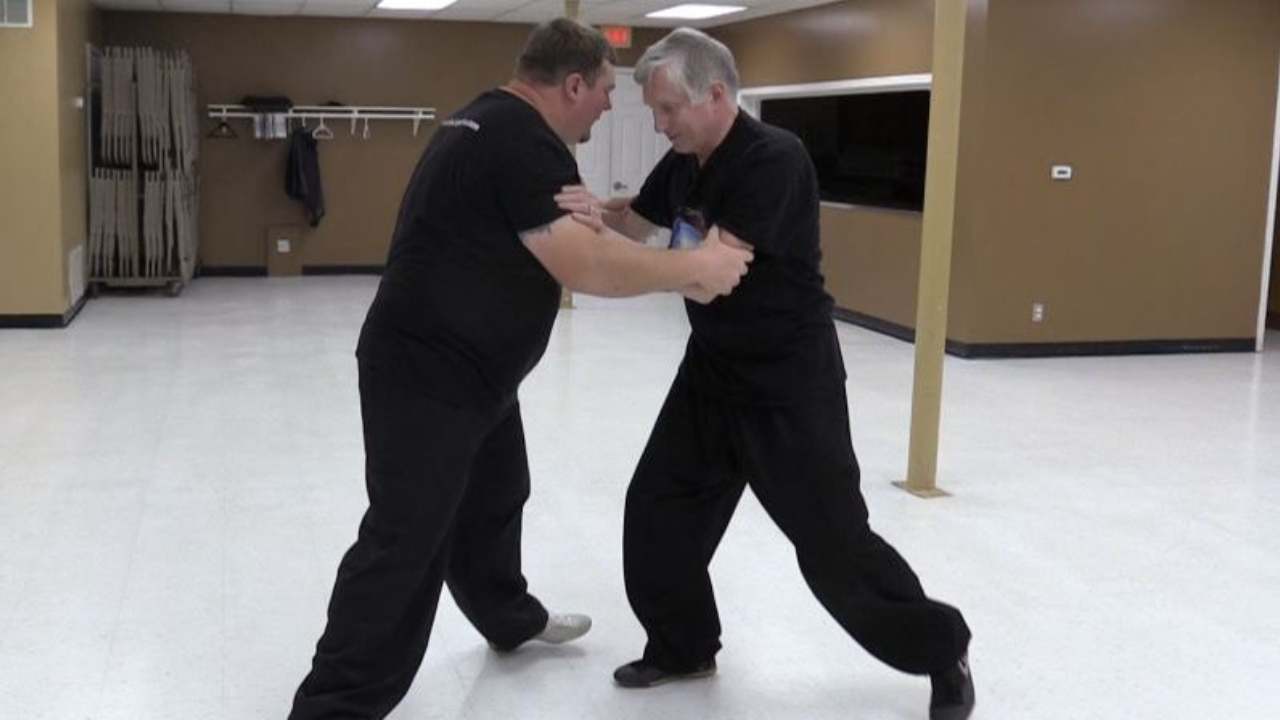
When you and a partner are doing push hands, or if you find yourself in a situation that calls for self-defense, one of your primary goals is to "remain centered."
Remaining centered requires you to maintain your mental balance and physical balance. If you lose your balance -- mentally or physically -- you are vulnerable. The same is true for your opponent.
This means that one of your goals when facing an opponent is to find his center, connect with it and control it.
On my website there are videos related to this topic. You can meld with your opponent's center as it is turning, helping it continue in the direction it is traveling. That's my favorite way to control an opponent's center, but there is another way.
When you practice push hands with a partner, you try to remain sensitive, and you do not want to give him an opening. You hide your internal strength from him. You are relaxed but aware, connected through the body, but you are flexible, moving, and able to respond and ...
Author - Instructor

Ken Gullette
I have practiced martial arts since 1973 and began studying the internal arts in 1987. My goal is to cut years off your development time by coaching you in the real skills for high-quality Tai Chi, Xingyi, Bagua. To see more about my bio, click the "About Ken" link on the menu at the top of this page.
Stay connected with news and updates!
Recent Posts
Categories
All Categorieschen taiji fighting applications
chen xiaowang straight sword form
critical thinking in martial arts
does tai chi make you live longer?
full contact vs point sparring
how to succeed in martial arts
how to use chi kung in daily life
how to use qigong in daily life
internal fighting arts podcast
ken gullette on kung fu conversations podcast
mindset of successful martial artist
principles of body mechanics in martial arts
the myth of longevity in tai chi
understanding tai chi energies
what is body method in tai chi