Tai Chi Energies Part 1 - A Deep Dive into Peng Jin
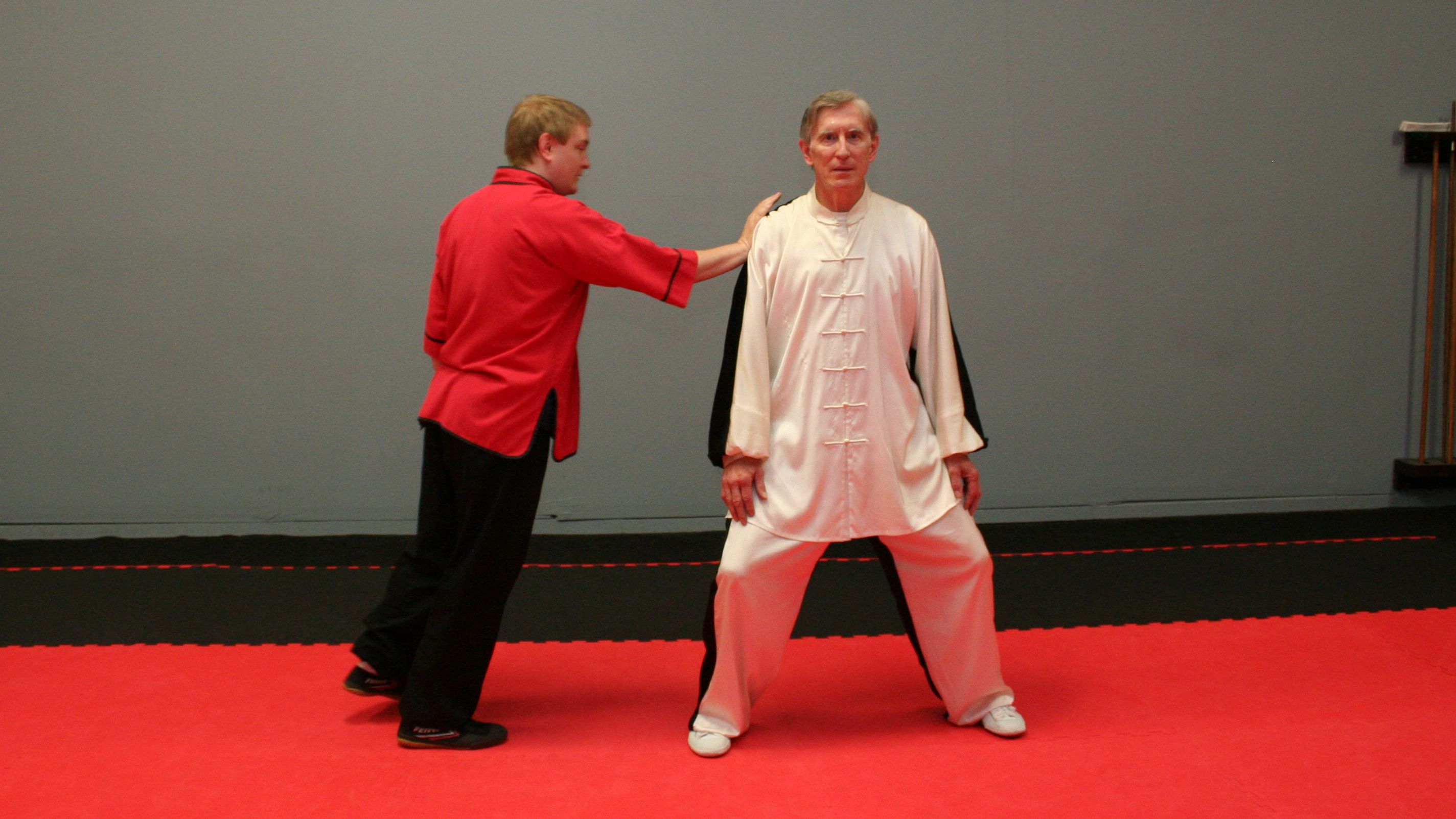
I’m putting together new videos for my website on the “Energies” of Taijiquan. The word energy is often misunderstood, in my opinion. A lot of mystical nonsense is often triggered by the word "energy" in the world of Tai Chi. A better word, in my opinion, is "method." Each “energy” is a method of dealing with force.
The first—and most important—is Peng Jin (often translated as Ward-Off Energy).
Peng is required for all the other energies/methods to work, and Peng relies on the ground path at all times. Without those two things—Peng Jin and the ground—you don’t really have Taijiquan. Without them, movements are empty.
They are working at all times and in all movements, even in what people sometimes call “transitions”—though we know there really are no transitions. No matter what you are doing in a Taiji form, a self-defense application is present.
Peng Jin is not necessarily a force you apply; it is a structural state you maintain. It gives you an expansive feeling inside. You are open, you are relaxed, you are song, and you are connected.
Peng is the body’s ability to receive, transmit, and return force without local collapse. Someone pushes you, grabs you, or tries to take you down—and no part of you collapses.
One of the first things I teach new students is how to establish and maintain the ground path, and how to set up Peng Jin in the body.
Peng should be present in your movement at all times. When force enters, it is distributed, grounded, and either redirected or reflected.
If someone pushes, you maintain song—a relaxed, connected state. When tension appears, Peng is broken.
If pressure increases suddenly and your body becomes more connected, Peng is alive. If you become less connected, Peng was imagined.
Even when you yield to force, you maintain Peng, because yielding without Peng is collapse.
If your leg sags inward during a movement like Buddha’s Warrior Attendant, Peng is broken. In Chen style, the legs are not meant to be “wobbly.” Unfortunately, this is a lesson some have forgotten—or never learned. But you are not one of them.
Chen Xiaowang said:
“Peng Jin is everything flowing, nothing broken.”
I would add this:
Peng is what happens when force comes at you and nothing collapses, nothing resists, and nothing rushes.
If you can accept force without deciding what to do yet, Peng is present. You can listen (feel the opponent’s force) without fear, until what to do becomes unavoidable. You listen while maintaining your structural integrity.
This is our goal as we work on forms, push hands, applications, and self-defense. We put it into action through increasingly realistic push-hands training that naturally evolves into close-range self-defense—all while maintaining Peng, using our internal strength to give our bodies a buoyancy that resists our opponent's strength and allow us to feel the force, adapt to it, neutralize it, and when our opponent goes off-balance, we counter. These steps require some of the other Taiji "energies" (methods) and we will discuss them in the next few blog posts.
And remember: nothing in Taijiquan is metaphysical.
It is made of physical skills.
You can do it.
--by Ken Gullette
Try Two Weeks Free and Get Step-by-Step Training in Taiji, Xingyi and Bagua from Basic to Advanced Skills with No Mystical Mumbo-Jumbo
More than 850 Video Lessons and Downloadable pdf documents -- and You Get It All During Your Free Trial!
Click this Button to Learn More and Watch a Video!
Author - Instructor

Ken Gullette
I have practiced martial arts since 1973 and began studying the internal arts in 1987. My goal is to cut years off your development time by coaching you in the real skills for high-quality Tai Chi, Xingyi, Bagua. To see more about my bio, click the "About Ken" link on the menu at the top of this page.
Stay connected with news and updates!
Recent Posts
Categories
All Categorieschen taiji fighting applications
chen xiaowang straight sword form
critical thinking in martial arts
does tai chi make you live longer?
full contact vs point sparring
how to succeed in martial arts
how to use chi kung in daily life
how to use qigong in daily life
internal fighting arts podcast
ken gullette on kung fu conversations podcast
mindset of successful martial artist
principles of body mechanics in martial arts
the myth of longevity in tai chi
understanding tai chi energies
what is body method in tai chi