Cai Jin Explained: The Plucking Method in Taijiquan
I have been writing about the "energies" of Taijiquan lately. Understanding Tai Chi energies in a realistic way is very important. The energies are often misconstrued by Taiji teachers, and they certainly aren't always described accurately or clearly in books and magazine or blog articles. So in this post we will discuss Cai Jin, also known as "Pluck" energy.

And remember, the word "energy" is misleading. It should be called a "method." The energies are methods of dealing with force. They are not mystical.

FYI - Cai is often pronounced "TSai," and rhymes with "sky." There's a slight "T" sound with the "S."

If you've ever plucked an apple from a tree, you know that if you pull too slowly, the branch bends down with the apple. So you have to "pluck" it - a sudden and fast jerk and the apple snaps off.

This is how Cai Jin happens. It is a sudden jerk using whole-body connected movement and it can take a person down or do some damage.

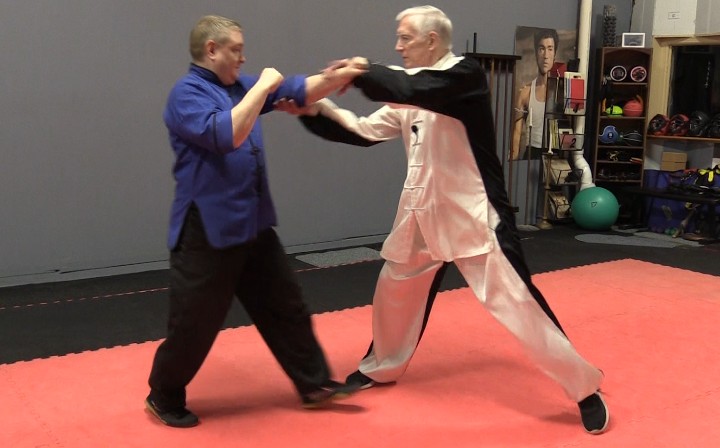
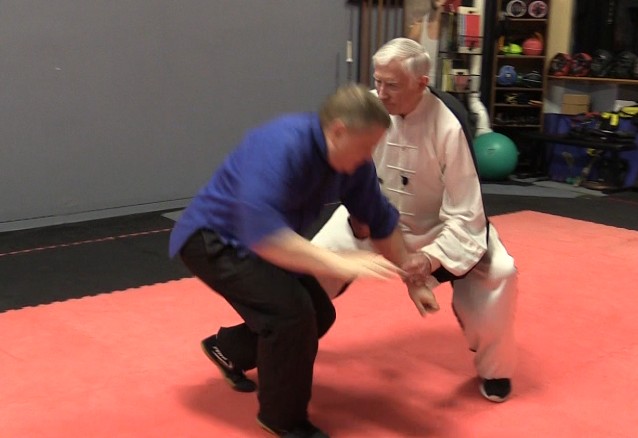
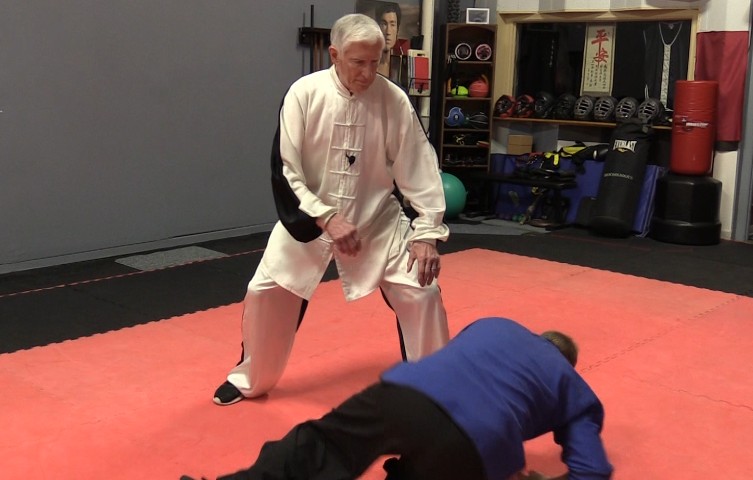
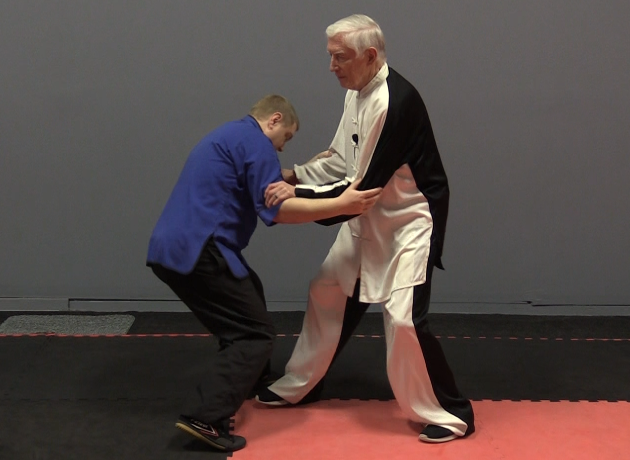
Let's take a quick look at how this can be used in one situation -- when an attacker throws a punch. In the first image, I intercept the punch and grab the arm.

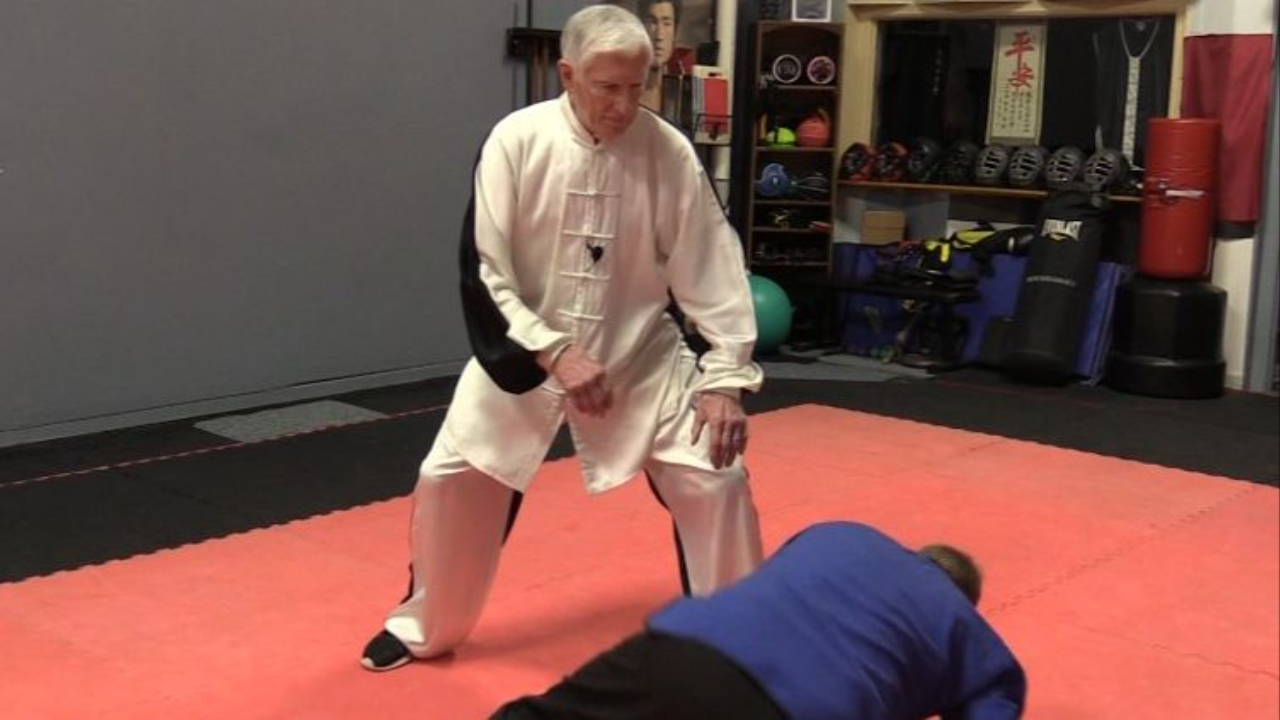
I ground from my front leg (my right leg in the photo), connect my arms to my Dan T'ien, and jerk my attacker down toward my left (next two pictures). I don't jerk with just the arms -- the whole-body is involved. Notice I am going deep into my left kua.

The mechanics of Cai Jin 

Cai works through sudden, coordinated downward pulling that exploits timing and your opponent's structure.

When you sink your body weight while maintaining connection through your arms to your Dan Tien, you're not just using arm strength—you're dropping your entire mass through a connected structure. This creates a force vector that your opponent isn't prepared for. He thinks his legs are supporting him, but the pluck messes up his alignment and is the same as removing his support.

Your hands, arms, torso, and legs work as one unit. When you sink, the force originates from your legs releasing and your center dropping, with your torso also connected through the arms. Cai does NOT mean pulling with your arms.

The speed of this "pluck" prevents your opponent from adjusting their stance or posture. Their body's inertia works against them—their upper body jerks downward while their lower body is still rooted, creating stress through their spine and neck.

You maintain your own structural integrity even as you drop. You're sinking into a stable, grounded position, not falling.

The sudden downward jerk disrupts your opponent's balance and proprioception. Their inner ear balance receives conflicting signals, and the neck strain can be genuinely painful because they're pulled in a direction their body wasn't anticipating, like what happens when you are sitting in your car and suddenly hit from behind.

As they are disoriented and off-balance, it opens a window of vulnerability so you can follow-up with your next technique.

Cai Jin can be found throughout the forms. In Chen style particularly, Cai is often integrated with chan si jin. The spiraling, whole-body power generation of Chen style means your Cai isn't just a straight downward pull—it often has a twisting, drilling quality that makes it even more disruptive to an opponent's structure.

Cai Jin is an expression of fajin - stored energy released instantaneously through a plucking action.

Another good use of Cai Jin is when you push someone, maintain contact, and as he instinctively pushes back to regain balance, that gives you an opportunity to pluck.

If you do this with a partner, please be careful. If your partner isn't braced, he could suffer a neck injury. It isn't necessary to hurt anyone to learn how it's done.

In any Taiji form -- in any style -- the first opportunity for Cai happens in the opening movement of any Taiji form, when the hands rise up and then drop again. The drop contains Cai Jin.

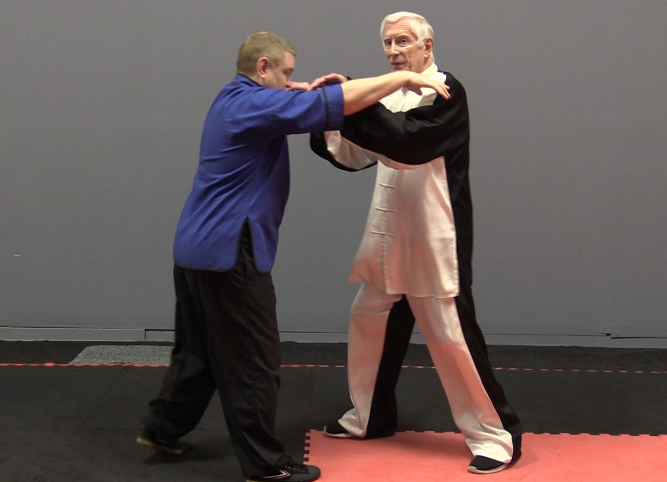
Let's say my partner is choking me with both hands, or it could be used against a two-hand push -- see the next three images.

I raise my hands, connected to the ground, and it breaks his grip (it really works). I quickly wrap my hands over his arms (next photo).

In the next photo, I am using a whole-body closing. It isn't just the arms, but the whole body closes. He thought his legs were holding up. Suddenly, they aren't.

Some people think Cai sometimes looks like Lu (Roll Back) but Lu works on force, guiding it away. Cai -- "Pluck" -- works on posture. It removes the structural condition that allows the attacker to have commitment to his attack.

I'm having a lot of fun diving deep into these "energies" (I prefer calling them "methods" but people know of them by the term "energies"). Because the word "energy" has been attached to them, some people who are drawn to the mystical begin to conjure up crazy ideas based on their fantasy.

Taijiquan is an art that was created for martial purposes. If you understand the martial purposes behind the concepts, you can better understand how to perform the movements. The energies (jin) are methods of dealing with force.

--by Ken Gullette

Try Two Weeks Free and Get Step-by-Step Training in Taiji, Xingyi and Bagua from Basic to Advanced Skills with No Mystical Mumbo-Jumbo

More than 850 Video Lessons and Downloadable pdf documents -- and You Get It All During Your Free Trial!

Click this Button to Learn More and Watch a Video!

Okay! Let Me See More!
Close

50% Complete

Two Step

Thank you for subscribing. I promise not to pelt you with constant messages that do not provide value. You will learn about internal arts news, inspirational posts, new videos, and other messages designed to help you in your martial arts journey.